
Recognize arthritis in dogs by stiffness, limping, difficulty rising or climbing stairs, and less willingness to play; a veterinarian must confirm the cause. Management often combines pain relief with changes to exercise, weight and home setup.
Signs may be subtle at first: your dog might move more slowly after resting or avoid a familiar jump. Arthritis can limit comfort and mobility, but a tailored plan can help manage symptoms. Don’t give human pain medicine unless your veterinarian tells you to; some medicines are dangerous for dogs.
| What you notice | What to do |
|---|---|
| Difficulty getting up or lying down | Record when it happens and arrange veterinary assessment |
| Slow walking or lameness | Note the pattern and discuss it with the veterinarian |
| Hesitation on steps | Avoid forcing the movement and report it at the appointment |
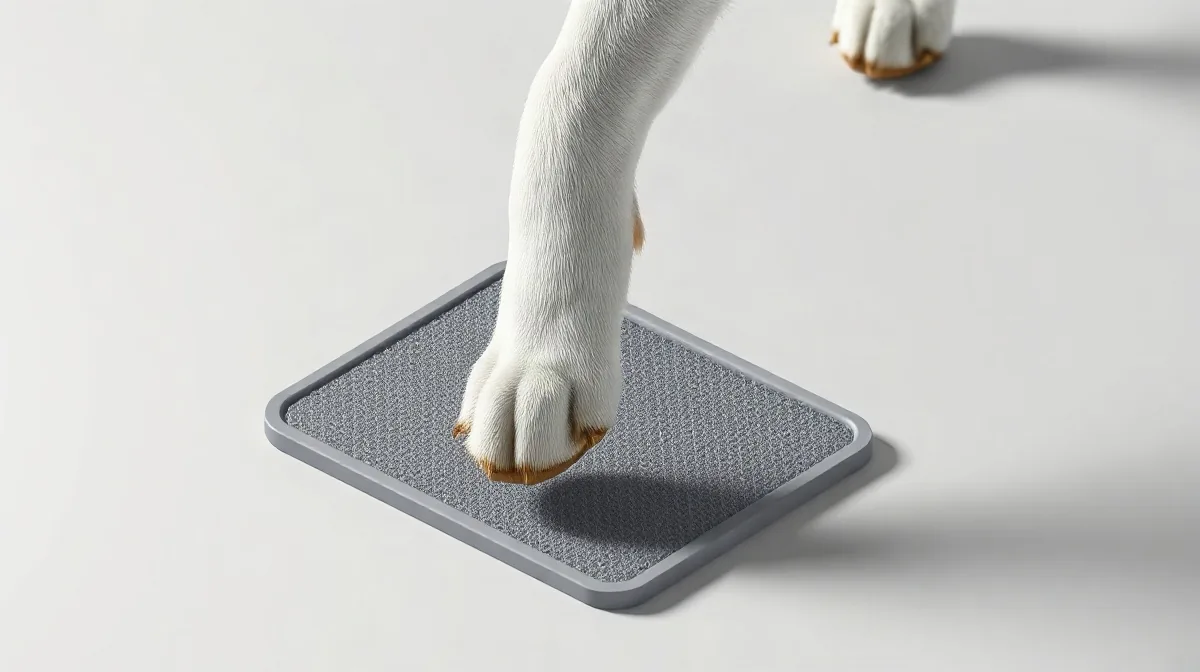
| Slippery floors | Add rugs or anti-slip mats |
| Pain seems poorly controlled | Contact the veterinarian to review the plan |
- 20% Dogs over one year old showing signs of chronic, progressive joint disease
- 40% Dogs under four showing signs of chronic, progressive joint disease
- 80% Dogs over eight showing signs of chronic, progressive joint disease
How does arthritis differ from normal aging?
Osteoarthritis differs from normal aging because it is a chronic, progressive joint disease, not an inevitable explanation for every change in an older dog. The AKC Canine Health Foundation states that signs of chronic, progressive joint disease occur in 20% of dogs over one year old, 40% of dogs under four, and 80% of dogs over eight.
Age alone does not confirm arthritis. A dog may slow down for reasons other than joint disease, but new stiffness or reduced movement deserves attention at any age. Difficulty rising, slower walks, limping, shifting weight, swollen joints, or hesitation on stairs are changes to notice and discuss with your veterinarian.
Track how your dog moves over time rather than dismissing a gradual change as simply getting older. Note when stiffness appears and whether rising, walking, or using steps becomes harder; that record can help your veterinarian assess the problem.
What changes inside an arthritic joint?
Osteoarthritis changes several parts of a dog’s joint: it causes inflammation and degeneration of the articular surfaces, alters the synovial membrane and the subchondral bone beneath the joint surface, and prompts bone production at joint edges and where intra-articular tendons originate.
The articular surfaces are the joint’s meeting surfaces. The synovial membrane lines the joint and the subchondral bone lies directly beneath those surfaces; changes in all three affect more than cartilage alone.
Bone can also form along the edges of the articular surface and at the origins of tendons within the joint. Together, these changes can make the joint painful and harder for a dog to use, affecting movements such as walking or getting up.
What changes at home can signal joint pain?
Changes in how your dog gets up, walks or handles stairs can signal joint pain, especially when the same difficulty recurs during ordinary activities.
Watch your dog rise from a bed or lie down: stiffness, a pause, or a slow, careful movement may be meaningful. A slower walk, lameness, or hesitation before going up or down steps are also signs to note. Look for patterns rather than relying on one awkward movement.
- Getting up and lying down: Notice repeated difficulty changing position.
- Walking: Watch for a slower pace or a limp.
- Stairs: Note hesitation or avoiding steps your dog previously managed.
- Weight and joints: Look for shifting weight or joints that appear enlarged or swollen.
Avoiding a familiar movement, such as taking stairs, can add context to the other changes. Write down what happens during rising, walking and steps, then arrange a veterinary appointment to assess the problem. Until then, place rugs or anti-slip mats on slippery routes your dog uses, particularly between resting spots and the door.
How does a veterinarian assess and treat arthritis?
A veterinarian assesses suspected arthritis by examining your dog, judging the condition’s severity and deciding on a care plan. Book an appointment if you notice signs of joint pain or stiffness.
The AKC Canine Health Foundation identifies nonsteroidal anti-inflammatory drugs (NSAIDs), including carprofen and deracoxib, as the standard treatment for canine osteoarthritis. A veterinarian may also consider another medication, such as gabapentin, as part of your dog’s overall plan.
Pain control may need adjustment over time. Ask your veterinarian how to monitor your dog’s comfort and when to report that your dog still seems uncomfortable. Describe changes you observe at home, such as reluctance to move or difficulty getting up, so the vet can review the plan.
How can exercise, food and home changes support treatment?
Regular, gentle exercise, veterinarian-guided food choices and safer floors can support a dog’s arthritis treatment by helping maintain movement and reducing avoidable strain.
Keep activity steady rather than pushing your dog through discomfort. Let your dog’s comfort and your veterinarian’s advice shape the routine; if walking or getting up becomes harder, report the change instead of adding exercise or adjusting medication yourself.
Discuss dietary changes with your veterinarian, including foods rich in omega-3 fatty acids. Ask whether a change suits your dog’s overall health and current treatment before switching foods or adding supplements.
At home, place rugs or anti-slip mats on slippery floors where your dog walks, gets up or turns. If movement remains difficult despite these adjustments, tell the veterinarian so the treatment plan can be reviewed.
When is home management not enough?
A swollen joint, lameness or worsening difficulty rising needs veterinary assessment; you cannot confirm arthritis or its cause at home. Your veterinarian can examine your dog and decide whether further assessment is needed.
Arthritis is progressive, so a plan that once controlled pain may need review. Contact your veterinarian if your dog still seems uncomfortable or has increasing trouble moving; do not wait for a home adjustment to resolve worsening signs.
Anti-inflammatory medication should only be started or changed under your veterinarian’s direction. The right treatment depends on your dog’s clinical plan, so do not use a dose prescribed for another animal or alter your dog’s dose yourself.
Rugs or anti-slip mats can give your dog better footing on slippery floors, but they cannot identify why a joint hurts or replace veterinary care. When you call, describe the swelling, lameness or changes in getting up and ask what to do next.
Frequently asked questions
Is stiffness in an older dog always arthritis?
What should I note before the vet appointment?
Can arthritis be managed at home?
Does arthritis get worse over time?
Sources
- Dakota Hills Veterinary Clinic — “Spotting the Signs of Arthritis in Dogs: What Every Pet Parent Should Know”
- pdsa.org.uk — “Arthritis in dogs – PDSA”
- rockwallurgentvet.com — “What are the 4 Stages of Arthritis in Dogs?”
- vet.cornell.edu — “Osteoarthritis | Cornell University College of Veterinary Medicine”
- VCA Animal Hospitals — “Arthritis in Dogs”