
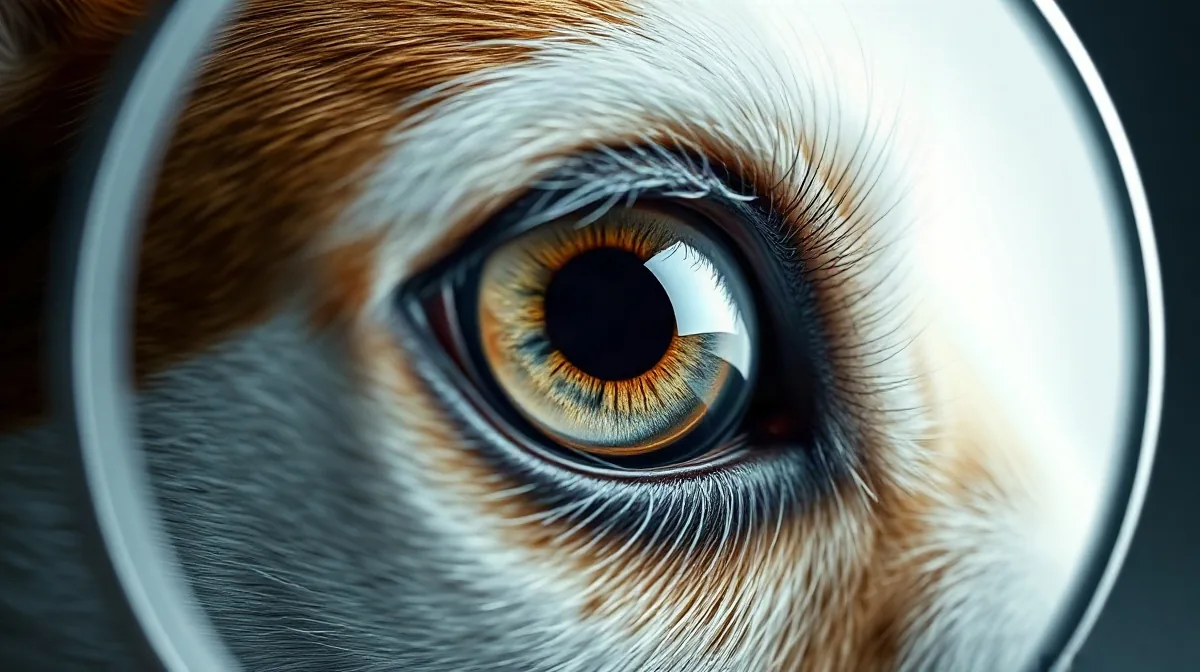
Canine cataracts make the lens cloudy and can impair a dog’s vision; a veterinarian confirms the diagnosis and advises on treatment. Early signs include a pale or cloudy appearance in the eye and changes in how your dog moves around familiar spaces.
A cloudy eye does not always mean a cataract, and the cause matters when choosing care. This guide explains what to watch for, how canine cataracts are assessed and which treatment options to discuss with your veterinarian.
| Option | What it addresses | Key limitation |
|---|---|---|
| Cataract surgery | The cloudy lens and vision loss | Suitability depends on eye and overall health; complications can occur |
| Topical corticosteroids | Lens-induced uveitis | Do not remove the cataract |
| Topical NSAIDs | Lens-induced uveitis | Do not remove the cataract |
| Ocuglo | May potentially slow progression | Does not replace diagnosis or surgical assessment |
- 85-90% MSPCA figure for patients experiencing long-term vision restoration after cataract surgery
- 10-90+% Range of the eye lens occupied by cataracts at the stage described by the MSPCA
- 12-year-old Bobo’s age when the MSPCA reports successful cataract surgery
What are the early signs of canine cataracts?
A cloudy or white area in a dog’s lens can be an early visible sign of cataracts, but cloudiness alone does not confirm the diagnosis. A veterinarian can examine the eye and assess whether the lens change is affecting vision.
Sudden cloudiness, severe redness, squinting, a wide pupil or sudden vision loss needs prompt veterinary attention. These changes warrant a call to your veterinarian rather than waiting to see whether they resolve.
As cataracts reduce sight, a dog may bump into walls or furniture, hesitate at stairs, or struggle to find food and water bowls. Changes in navigation can be easier to notice than a change in the eye itself.
Slow vision loss can be difficult to spot because dogs adapt to reduced sight. Watch how your dog moves around familiar rooms and approaches stairs, as well as for changes in lens appearance.
What surgery outcomes can and cannot tell you
The MSPCA says 85-90% of patients experience long-term vision restoration after cataract surgery. Glaucoma or retinal detachment can cause blinding complications, so this outcome does not guarantee that every dog will regain vision. Whether surgery is suitable depends on the individual patient; discuss the risks and expected benefits with your veterinarian.
How does an eye exam distinguish cataracts from other cloudiness?
A veterinary eye exam distinguishes a cataract from other cloudiness by checking whether the lens itself is opaque, how much that opacity affects vision, and whether inflammation or pressure problems are also present.
Cataracts are opacities within the lens. Age-related lens changes can also make a dog’s eye look cloudy, so appearance alone cannot establish that the cloudiness is a cataract. The veterinarian examines the lens and assesses the effect on the dog’s vision.
The MSPCA describes cataracts at the stage discussed as occupying 10-90+% of the eye lens. That range describes the extent of lens opacity; it is not a stand-alone diagnosis. The exam must determine whether the lens is opaque and evaluate the eye as a whole.
What else the examination checks
The veterinarian also checks for inflammation and pressure-related problems. These findings matter because they can affect treatment choices and whether surgery can be planned safely.
If your dog’s eye looks cloudy, arrange a veterinary examination rather than relying on appearance to identify the cause. Sudden cloudiness, severe redness, squinting, a wide pupil, or sudden vision loss warrants prompt veterinary attention.
When should a dog with cataracts be assessed urgently?
A dog with sudden eye cloudiness, marked redness, squinting, a wide pupil or sudden vision loss needs urgent veterinary assessment, not a routine check.
These changes can signal more than a cataract. Cataracts may trigger lens-induced uveitis—inflammation inside the eye—which a veterinarian may treat with prescribed anti-inflammatory drops. The right medicine depends on the eye’s condition, so an examination should come before treatment.
Diabetes makes prompt veterinary discussion especially important: cataracts can form rapidly in diabetic dogs, and complications such as glaucoma may follow. Contact your veterinarian promptly about new cloudiness or changes in vision, and ask whether an eye examination or referral to a veterinary ophthalmologist is needed.
Do not put human eye drops or leftover medication in your dog’s eye. Use only treatment prescribed for this dog; a drug that helped before, or was meant for another pet, may not be suitable.
When is surgery worth discussing?
Cataract surgery is worth discussing when the cloudy lens is affecting your dog’s vision and an eye examination finds no health reason that rules out surgery. Suitability depends on vision, eye health and your dog’s overall health.
A veterinary ophthalmologist can assess how much the cataract limits vision and whether further testing supports surgery. Cataract surgery addresses the cloudy lens itself; anti-inflammatory treatment may manage inflammation, but it does not clear the lens.
Age and duration of blindness do not settle the question
The MSPCA reports successful cataract surgery in Bobo, a 12-year-old Chinese Crested who had been blind from cataracts for two years. His case shows that blindness lasting years does not automatically rule out an assessment for surgery.
The MSPCA says 85-90% of patients experience long-term vision restoration after surgery. Glaucoma or retinal detachment can cause blinding complications, so the possibility of restored sight must be weighed against the condition of the eye and the dog’s wider health.
Ask a veterinary ophthalmologist whether the cataract is the main cause of reduced vision, what further tests are needed, and whether your dog’s eye and overall health make surgery a reasonable option.
What can medical treatment do if surgery is unsuitable?
When cataract surgery is unsuitable, veterinary treatment can control inflammation around the lens, but it cannot clear the cataract or make the cloudy lens transparent.
Lens-induced uveitis is inflammation associated with a cataract. A veterinarian may prescribe topical corticosteroid drops or non-steroidal anti-inflammatory drugs (NSAIDs) to manage it; the choice and treatment plan depend on the individual dog. Use only medication prescribed for your dog.
- Anti-inflammatory drops: Help manage inflammation, not the cataract itself. They do not restore the lens’s transparency.
- Ocuglo: This nutritional supplement may potentially slow cataract progression, but it does not replace a veterinary examination or assessment of whether surgery is suitable.
Agree on ongoing care
If surgery is not appropriate, ask your veterinarian for an individual monitoring and eye-care plan. It should specify what treatment to use and when to arrange follow-up, so changes in the eye can be assessed rather than managed by guesswork.
What are the limits and risks of cataract treatment?
Cataract surgery can restore a dog’s vision, but it cannot guarantee sight and may lead to serious complications, including glaucoma or retinal detachment.
A dog’s suitability for surgery depends on more than lens cloudiness: the veterinarian must consider how much vision the cataract affects, whether inflammation is present, concerns about eye pressure and the dog’s general health. A veterinary ophthalmologist can assess the cataract’s effect on vision and whether treatment is warranted.
- Surgery: It can restore vision, but the outcome is not assured, and glaucoma and retinal detachment are possible complications.
- Anti-inflammatory drops: Topical corticosteroids or non-steroidal anti-inflammatory drugs can help control inflammation inside the eye. They do not clear the cloudy lens.
- Ocuglo: This nutritional supplement is described as potentially slowing cataract progression; it does not remove the cataract.
Living with reduced vision
Dogs can adapt to gradual sight loss, especially when their surroundings stay predictable. Keep food and water bowls in the same places, and make stairs and furniture easier to navigate so your dog can move around familiar rooms safely.
Do not use human eye drops or leftover medication; ask your veterinarian which treatment is appropriate for your dog.
Frequently asked questions
Does every cloudy eye mean a cataract?
Which signs mean my dog needs prompt care?
Can eye drops cure a cataract?
Can an older dog still be considered for surgery?
Key takeaways
- Cloudiness is a clue, not a diagnosis; a veterinary eye exam distinguishes lens opacity from other causes.
- Sudden redness, squinting, a wide pupil or vision loss needs prompt assessment.
- Surgery addresses the cataract; anti-inflammatory drops manage associated inflammation, not lens opacity.
- Diabetes can make cataract progression and complications more urgent.
- Never use human drops or leftover medicine without veterinary direction.
Sources
- Cove Pet Care — “Cataracts in Dogs: Symptoms, Surgery, Recovery & What to Expect”
- vet.cornell.edu — “Canine cataracts | Cornell University College of Veterinary Medicine”
- Best Friends Animal Society — “Cataracts in Dogs”
- Boston Veterinary Eye Care — “Cataracts in Dogs and Cats”
- animaleyecare.com.au — “Non-Surgical Management Of Cataracts – Animal Eye Care”