
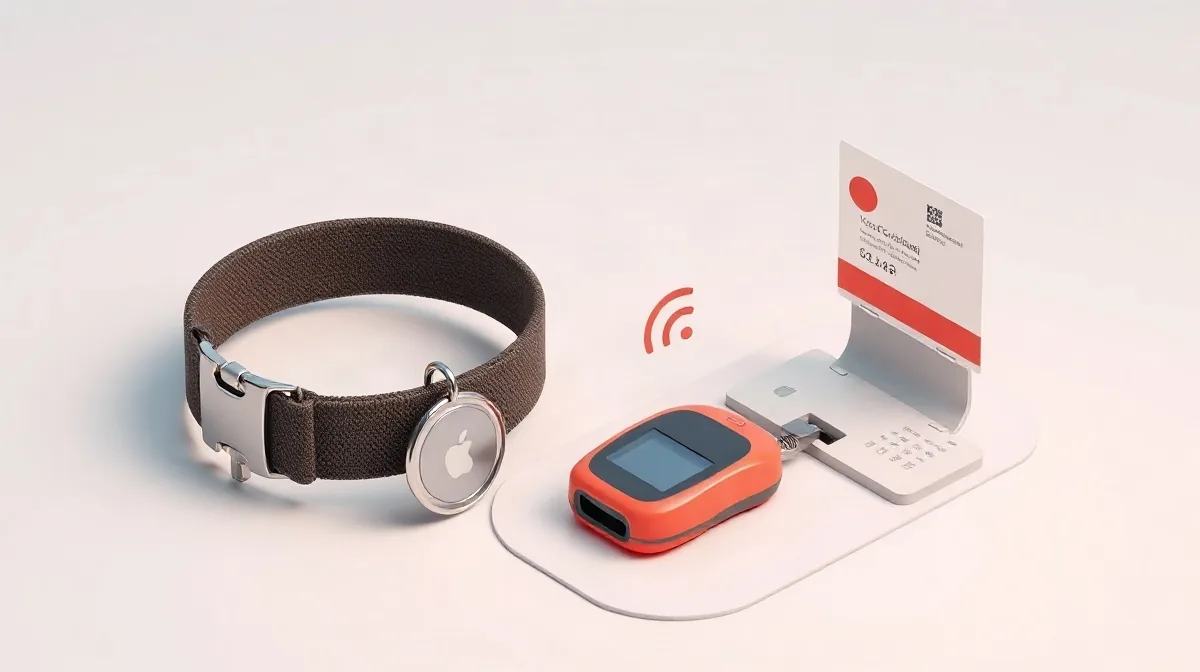
A dog’s microchip helps reunite a lost pet with its owner by giving a vet or shelter a permanent ID to scan and trace to contact details.
The chip is not a GPS tracker: it cannot show where your dog is. It works when someone finds the dog, has the chip scanned and uses the registered details to reach you. That makes keeping your contact information current an essential part of how dog microchips help lost pets get home.
| Identification method | What it provides | What the finder needs to do |
|---|---|---|
| Microchip | A permanent identification number beneath the skin | Take the dog to a place with a scanner |
| Registry record | Contact details associated with the chip number | Keep the details current |
| Collar ID tag | Contact information visible on the dog | Keep the tag attached and its details accurate |
- 52.2% Rate at which lost dogs with microchips are returned to their owners
- 21.9% Rate at which lost dogs without microchips are returned to their owners
- 2.4 times How much more likely dogs with microchips were to be returned in a 2009 study of 53 animal shelters
What does a dog’s microchip actually store?
A dog’s microchip stores a unique identification number; it is a permanent identification tag beneath the skin, not a GPS tracker, and it cannot show the dog’s location.
The American Veterinary Medical Association says pet microchips usually contain only a unique identification number that is nine, 10, or 15 digits long. A scanner reads that number; the associated registration record links it to the owner’s contact details. The number itself does not contain those details, so the record needs to be current.
Why a collar still matters
A collar and ID tag give a finder a direct way to contact you without finding a scanner or taking your dog to a veterinary clinic or shelter. Keep both on your dog as well as maintaining the microchip registration record.
How is a microchip implanted, and what should you check afterward?
A veterinarian implants a dog microchip under the skin between the shoulder blades, either during an examination or while the dog is under anesthesia for another procedure.
After implantation, ask the veterinary clinic to scan the chip and give you its identification number. Keep that number with your dog’s medical records, and follow the clinic’s instructions to register your contact details.
Check the registration and understand the limits
Confirm which registry holds your contact record; the chip number alone does not tell you whether your details are current. If you move or change phone numbers, update the record with that registry.
A microchip does not send an alert or track your dog’s location. Someone must find your dog and scan the chip—typically at a veterinary clinic or shelter—to access the linked contact information. Keep an ID tag on your dog’s collar as well, so a finder can reach you without a scanner.
Why is a microchip not a guarantee that your dog will come home?
A microchip does not guarantee that your dog will come home because reunification depends on someone scanning the chip and reaching you through its contact details. The American Veterinary Medical Association reports that lost dogs with microchips are returned to their owners at a rate of 52.2%, compared with 21.9% for dogs without microchips.
A 2009 study of 53 animal shelters by researchers at the Ohio State University found that dogs with microchips were 2.4 times more likely to be returned to their owners. Those figures show improved odds, not certainty: the chip is useful only if a shelter or veterinary clinic scans it and can contact you.
Visible ID and an active search still matter
A person who finds your dog may not have a scanner, so a collar with an ID tag can provide a direct way to reach you. Keep the contact details linked to the chip current as well; a scan cannot help if the owner cannot be reached.
Continue searching if your dog is missing. A microchip supports identification when your dog reaches a shelter or veterinary clinic; it does not replace visible identification or the search itself.
What registration mistake can stop a microchip from helping?
The registration mistake that can keep a dog’s microchip from helping is leaving the chip number unlinked to current contact details. Implantation alone does not add your phone number or address; complete the registry’s enrollment steps so a person who scans the chip can reach you.
Check the registration for your dog’s name, phone number and address. Update the record after a move or phone-number change; an old number can send a shelter or veterinary clinic looking for you to the wrong place.
When the dog changes hands
If you adopt a dog or take over its care, ask the previous keeper or veterinary clinic how to transfer the registration. Do not assume that a change of owner automatically updates the registry.
Keep the registry’s name and your dog’s chip number somewhere you can retrieve quickly if the dog disappears. Those details help you identify the right record when you contact the registry.
When does microchipping not replace other identification?
A microchip cannot replace a collar tag or an active search: it helps only if someone takes your dog to a shelter or veterinary clinic where staff can scan the chip.
A collar tag gives a finder your contact information immediately, without a scanner. Keep the details current and use the tag alongside the microchip; collars can come off, while a chip can be checked after that.
Microchip readers must be able to detect the implanted chip, and scanner compatibility can matter. If your dog’s identification is uncertain, ask a shelter or veterinary clinic to scan the dog.
If your dog is missing
Contact local shelters and veterinary clinics and share a current photo. Start searching and notifying them right away—do not wait for anyone to scan the chip.
Frequently asked questions
Can a dog’s microchip track its location?
Does a microchip work if I have not registered it?
Should my dog still wear a collar after being microchipped?
Where is a dog’s microchip placed?
Sources
- 24pet.com — “How Microchips Help Animal Shelters Reunite Pets Faster”
- oasispetclinic.com — “How Microchipping Reunites Lost Pets with Fullerton Families”
- bestfriends.org — “Using Pet Microchips to Find Lost Pets”
- HomeAgain Pet — “3 Million Pets Reunited | HomeAgain Pet Recovery”
- animalhospitalhumble.com — “How Microchipping Can Help Reunite Lost Pets with Their Owners”