
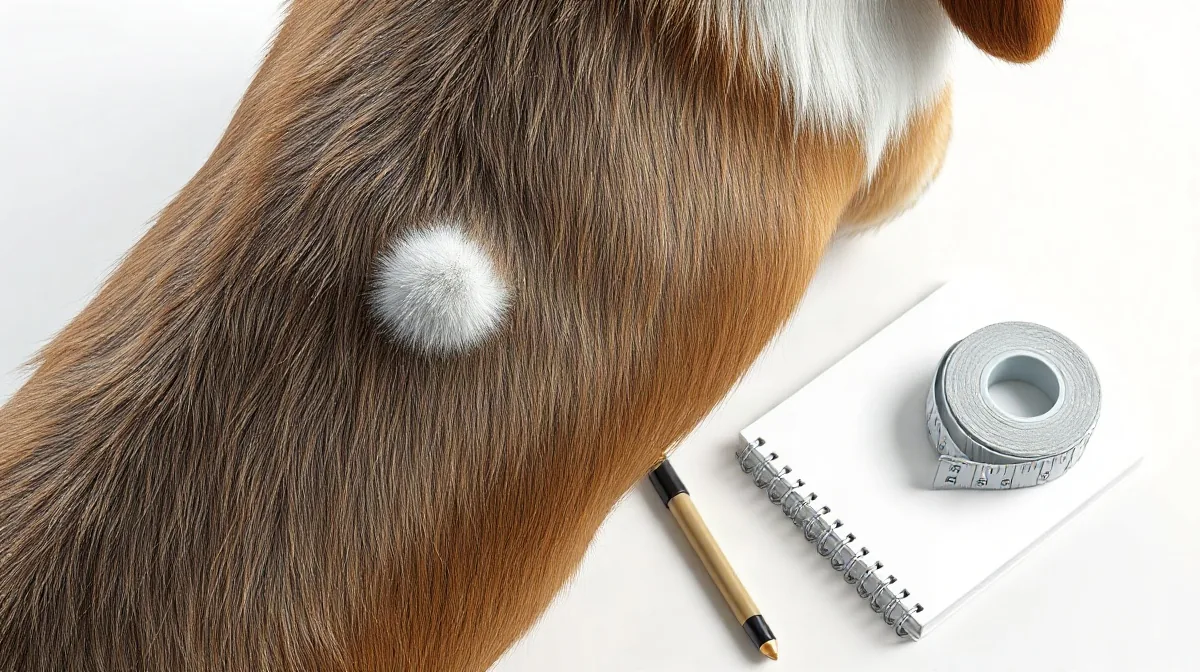
Have a vet check any new or changing lump on your dog, and seek prompt care if it grows quickly, bleeds, hurts or affects movement. You cannot tell what a lump is by looking or feeling alone.
Dog lumps and bumps can have different causes, and a harmless-looking one may still need attention. Note when you first noticed it and whether its size, shape or feel changes; your vet can examine it and advise whether it needs further testing.
| Observation | What to record | Next step |
|---|---|---|
| Rapid growth or sudden appearance | When first noticed; size and change | Contact a veterinarian promptly |
| Bleeding, ulceration or discharge | Type of discharge and when it occurs | Arrange veterinary assessment |
| Pain, warmth or redness | Location and whether your dog reacts | Contact a veterinarian promptly |
| Colour, texture or shape changes | Description and dated photographs | Arrange veterinary assessment |
| Licking, biting or scratching | How your dog interacts with the lump | Seek veterinary advice |
- 1 in 2 risk for dogs 10 years or older, as stated by the American Veterinary Medical Association
When should a dog’s lump be checked promptly?
Arrange a prompt veterinary assessment if your dog’s lump appears suddenly, grows quickly, bleeds, ulcerates or releases blood, pus or other fluid.
Pain, warmth or redness around a lump also warrant a call to your veterinarian. Contact them promptly if your dog is licking, biting or scratching the area; that attention can further irritate the skin.
- Appearance: A change in colour, texture or shape needs veterinary assessment, even if the lump is still small.
- Movement: A lump that interferes with walking or other movement should be checked.
- Irritation: A lump that becomes irritated needs review, even when it may be benign.
Do not wait for a lump to become large before arranging an examination. Benign lumps can still cause problems if they interfere with movement or become irritated, and appearance alone cannot confirm what a lump is. A veterinarian can assess it and advise whether diagnostic testing is needed.
How can you track a new or changing lump at home?
Track a new or changing dog lump with a gentle nose-to-tail check, a written log and photographs, so you can show your veterinarian what changed and when.
During the check, note every lump’s location and how many you find. For each one, record when you first noticed it, its size, colour, shape and texture, and whether it moves under gentle touch or seems fixed to the tissue beneath it.
- Surface changes: Record any change in colour, shape or texture.
- Discharge: Note whether the lump is bleeding, oozing or producing fluid.
- Your dog’s response: Record discomfort and any licking, biting or scratching at the area.
Keep the notes together in a written log and take clear photographs to share with your veterinarian. Compare each new check with your earlier records rather than relying on memory; a photograph can help show a change that is difficult to describe.
When to contact your veterinarian
Contact your veterinarian if a lump grows quickly, changes, bleeds or oozes, feels painful, warm or red, or prompts repeated licking, biting or scratching. Home observations can document changes, but they cannot determine whether a lump is cancerous; that requires veterinary diagnostic testing.
Why does a lump still need assessment if my dog seems well?
A dog’s lump needs veterinary assessment because appearance alone cannot show whether it is cancerous; confirmation requires diagnostic testing. A vet may recommend fine needle aspiration, biopsy or imaging to investigate the mass.
The American Veterinary Medical Association says approximately 1 in 4 dogs will develop cancer at some point during their life, and the risk increases to 1 in 2 for dogs 10 years or older. Those figures do not identify the cause of any particular lump, but they are a reason not to judge a growth by sight or by how your dog seems.
Why size and symptoms matter
Even a benign growth can become irritated or large enough to affect mobility. Its practical effect matters alongside its suspected cause: note whether your dog licks or scratches it, or whether it becomes painful, warm, red, bleeds or changes in size, shape, colour or texture. These changes warrant veterinary advice.
A small lump is not automatically harmless, and waiting until it causes an obvious problem can delay assessment. Record when you first noticed it and any changes in size or texture; a photo can help you show the vet how it has changed. Arrange veterinary advice rather than relying on appearance or waiting for discomfort.
What tests can a veterinarian use to investigate a lump?
A veterinarian can investigate a dog’s lump with fine needle aspiration, biopsy or imaging; diagnostic testing is needed to determine whether the mass is cancerous. The choice depends on what the vet needs to clarify about that particular lump.
The examination includes the lump’s location and any changes, as well as signs such as pain or discharge. Tell the veterinarian when you noticed it and whether its size, texture or appearance has changed; mention any bleeding, licking or irritation too.
- Fine needle aspiration: The veterinarian collects cells from the lump for examination.
- Biopsy: A tissue sample is taken to investigate the mass.
- Imaging: The veterinarian may use imaging to assess the mass and its location.
The American Veterinary Medical Association says computed tomography (CT), magnetic resonance imaging (MRI), and positron emission tomography (PET) can help identify a tumor’s location and possible treatment options.
Ask what the result will change
Before agreeing to a test, ask what it is intended to clarify and what the next step will be after the result. That helps you understand how the test fits into decisions about monitoring or further care.
When might a veterinary oncologist be involved?
A veterinary oncologist may be involved when your veterinarian’s assessment and diagnostic findings indicate that specialist input could help guide the next step.
A veterinary oncologist is a veterinarian with advanced training and certification in oncology from a certifying body such as the American College of Veterinary Internal Medicine. The American Veterinary Medical Association identifies the American College of Veterinary Internal Medicine as an example of a certifying body.
A lump’s appearance alone cannot establish whether it is cancerous. Your veterinarian may recommend diagnostic testing, such as fine needle aspiration, biopsy or imaging, and use the findings to decide whether an oncology referral is appropriate.
Questions to ask about a referral
If your veterinarian discusses a specialist, ask what question the referral is meant to answer and how it fits with the diagnostic plan. The answer may clarify whether the next step is further testing, interpretation of results or discussion of care options.
Bring details that can help with the assessment: when you first noticed the lump, where it is, and whether its size, texture or appearance has changed. Note any bleeding, discharge, pain or repeated licking, biting or scratching, and share those observations with your veterinarian.
What can home monitoring not tell you?
A photograph, touch check or size log can show how a dog’s lump changes, but none can tell you whether it is benign or cancerous; that requires veterinary assessment and diagnostic testing.
A written record can note when you first noticed the lump, its size, colour, texture, location and any discharge. Take a photograph to share with your veterinarian, but do not repeatedly squeeze or handle the lump: observe it and record changes instead.
A lump that looks quiet still needs assessment, because appearance alone cannot establish what it is. A benign growth can also become a problem if irritation develops or its size interferes with your dog’s movement.
Contact your veterinarian promptly if the lump grows quickly, bleeds, hurts, feels warm or changes in colour, texture or shape. Discharge, redness, or persistent licking, biting or scratching are also reasons to seek veterinary advice rather than continue watching at home.
Frequently asked questions
Can I tell whether a dog’s lump is cancer by looking at it?
What should I write down about a lump?
Which lump changes call for prompt veterinary attention?
Can a benign lump still be a problem?
Key takeaways
- A growing, bleeding, painful, warm or changing lump needs veterinary assessment.
- Track location, size, texture, movement and discharge in a written log, with photographs.
- Touch and appearance cannot confirm whether a lump is cancerous.
- Benign lumps can still cause irritation or interfere with mobility.
Sources
- providencevetva.com — “Skin Masses: When to Be Concerned About Your Pet’s Lumps and Bumps – Providence Vet”
- PetMD — “Lumps, Bumps, and Cysts on Dogs”
- rvsvet.com — “Pet Lumps & Bumps: When to Rush to the Vet vs. When to Watch and Wait – Rustebakke Veterinary Service”
- Fountain Valley Emergency Pet Hospital — “Pet Lumps & Bumps: When to Worry and What to Do”
- ImpriMed — “Lumps on Dogs: When to Worry and What to Expect at the Vet”