
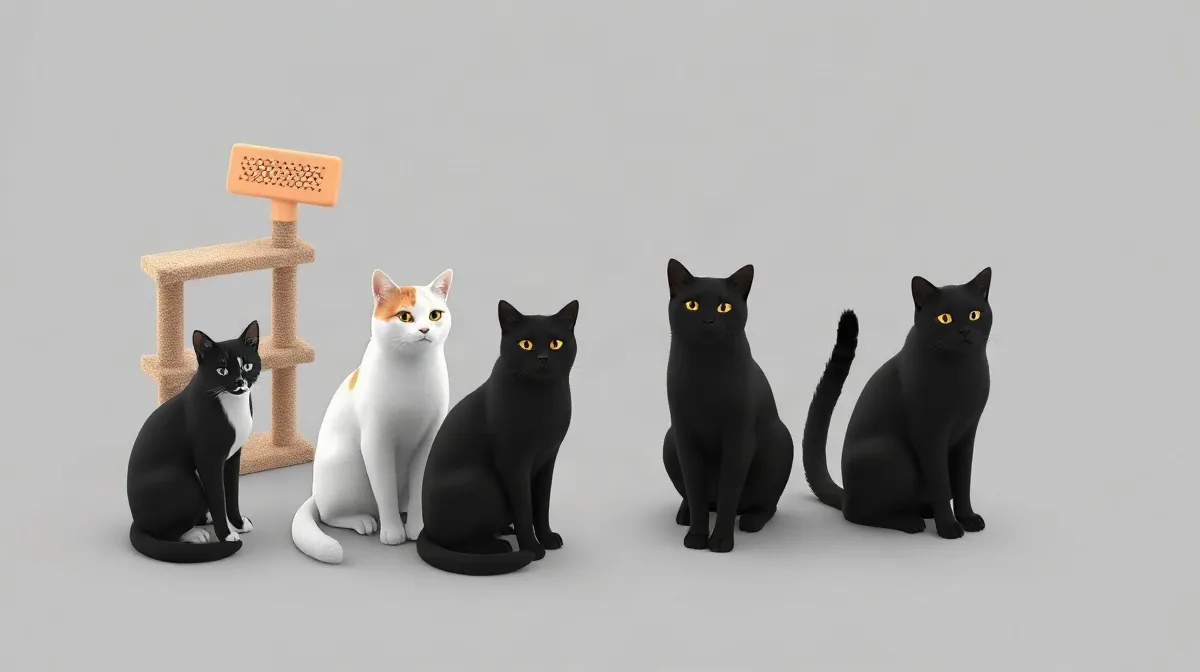
Choose a cat breed by matching its temperament, activity level, grooming needs and health considerations to your household. Breed traits can guide your choice, but individual cats vary.
Some cats need regular brushing or plenty of play; others are more content with a quieter routine. Consider your space, schedule and experience with cats, then look beyond appearance when comparing cat breeds.
This guide covers the main breed types and the traits that can help you find a cat suited to your life.
| Breed | Described temperament | Energy or care consideration |
|---|---|---|
| Bengal | Energetic, affectionate, adventurous | High energy; plan for climbing and play |
| British Shorthair | Easygoing, calm, devoted | Medium energy |
| Maine Coon | Playful, adaptable, friendly | Medium energy |
| Sphynx | Not specified | Hairless cats may struggle in cold temperatures |
- 73 cat breeds recognised by TICA
- 33.2% F2 Bengal hybrids and later generations in the study that still showed destructive behaviours
- 89.5% Bengal cats in the study that demonstrated climbing behaviours
- 78.9% Bengal cats in the study that showed strong hunting behaviours
What does it mean for a cat breed to be recognised?
A cat breed is a type recognised by a registration organisation, which sets its own breed list and standards. TICA recognises 73 cat breeds, but that count is TICA’s classification, not a universal total.
Breed counts differ between registries, so check which organisation’s list you are using. A breed name gives you a starting point for comparing cats, not a guarantee that every individual will have the same temperament or care needs.
Compare traits, then consider the individual cat
- Bengal: Compare its energy and activity needs with those of a British Shorthair, which is described as easygoing and calm.
- Maine Coon: Its listed traits include playfulness and adaptability; consider these alongside the more specific grooming needs of the cat in front of you.
- Persian: Look into coat care as well as the breed’s general temperament.
- Ragdoll: Treat breed descriptions as a guide, then ask about the individual cat’s behaviour and routine.
- Siamese: Compare its social and activity needs with your household’s daily routine.
- Sphynx: Check the care requirements of the individual cat rather than relying on the breed name alone.
Breed profiles can help you narrow your search, but meet the cat and discuss its health and care with the person responsible for it before choosing.
How do cat breeds differ in appearance, temperament and care?
Cat breeds differ in coat, body type, temperament and energy, so compare how a breed’s activity needs and grooming fit your home before choosing.
Temperament and activity
Bengals are energetic, affectionate and adventurous, with high energy; plan for daily activity and places to climb. British Shorthairs are easygoing, calm and devoted, with medium energy. Maine Coons are playful, adaptable and friendly, also with medium energy.
- Bengal: Make room for active play and climbing opportunities.
- British Shorthair: Consider its calm, devoted nature and medium energy when assessing your household.
- Maine Coon: Its playful, adaptable temperament may suit a home looking for a friendly cat with medium energy.
Coat and routine care
Persian, Ragdoll, Siamese, Siberian, Norwegian Forest cat, Scottish Fold and Sphynx are other breeds to compare. Their appearances and care requirements are not interchangeable: check each breed’s coat and health needs individually before deciding.
- Coat: Find out what grooming the individual breed’s coat requires.
- Health: Check breed-specific health needs with a veterinarian before bringing a cat home.
How should you weigh a breed’s activity and behaviour?
Weigh a breed’s activity and behaviour against your home’s layout and the time you can give it, treating breed tendencies as clues rather than guarantees about an individual cat.
Bengals may need more than ordinary floor space: climbing, play and suitable outlets for hunting behaviour are practical considerations when deciding whether one fits your household.
- Climbing space: In the same study, 89.5% of the Bengal cats demonstrated climbing behaviours. Consider whether your home can accommodate safe places to climb.
- Hunting play: In the same study, 78.9% showed strong hunting behaviours. Plan how you could direct that behaviour into play.
- Destructive behaviour: A study by Martinez-Caja et al. found that 33.2% of F2 Bengal hybrids and later generations still showed destructive behaviours. Consider whether you have time to provide engagement and manage unwanted behaviour.
These findings describe tendencies within the cats studied, not a prediction for every Bengal. An individual cat’s behaviour can differ, so consider its needs as well as the breed’s general traits.
Before choosing, be realistic about the space available for climbing and the time you can devote to play. If you are considering a particular cat, ask about its observed behaviour and daily needs.
When can a breed’s appearance bring a welfare trade-off?
A cat’s appearance can bring a welfare trade-off when a physical trait makes everyday care more demanding; hairless cats, for example, may struggle to stay thermally comfortable in cold temperatures.
A Sphynx’s care plan should account for warmth, especially in a cold home or climate. Its distinctive appearance alone cannot tell you whether the cat will suit your household or the temperatures where you live.
Check the needs of the individual cat
The UK government’s Opinion on feline breeding practices considers risks and impacts for breeding cats, their offspring and future generations. That wider view matters when a visible trait may affect a cat’s comfort or care throughout life.
- Health: Ask the breeder or adoption provider about the individual cat’s health and any known concerns.
- Daily care: Ask what care its physical traits require, including how to keep a Sphynx warm.
- Home and climate: Consider whether your household and local temperatures can meet those needs consistently.
Get specific answers about the cat you are considering, rather than relying on breed appearance to predict fit.
Which cat breed should you choose for your home?
Choose the cat whose everyday energy and needs fit the time and space you can offer: the British Shorthair and Maine Coon are described as medium-energy, while the Bengal is high-energy.
- British Shorthair: Its calm, easygoing description makes it a closer match than the Bengal if you want a less energetic companion. Individual cats can differ, so treat breed descriptions as a guide rather than a guarantee.
- Maine Coon: The breed is described as playful, adaptable and medium-energy; consider whether that combination suits your household.
- Bengal: Its high energy and reported climbing and hunting behaviours mean it may be a poor fit if you cannot provide opportunities for climbing and play.
Compare the individual cat with your routine
Breed guides can help you narrow household choices, but meet the cat and ask about its behaviour before deciding. A calm description does not ensure that every British Shorthair will be calm, just as a breed label cannot tell you how much activity an individual cat will seek.
For more options, use focused guides to domestic cat breeds. Horse-breed and chicken-breed guides are relevant only if you are comparing other kinds of animals.
Frequently asked questions
How many cat breeds are there?
Are Bengals good indoor cats?
Are Sphynx cats suited to cold homes?
Which cat breed is calm and easygoing?
Key takeaways
- TICA recognises 73 cat breeds; registries do not use one universal count.
- Bengals are described as high-energy, and a study reported frequent climbing and hunting behaviours.
- Hairless cats may need protection from cold conditions.
- Compare a breed’s activity and care demands with your home before choosing.
Sources
- Litter-Robot by Whisker — “Complete Guide To Cat Breeds”
- tica.org — “Browse All Breeds – TICA – The International Cat”
- gov.uk — “Opinion on the welfare implications of current and emergent feline breeding practices – GOV.UK”