
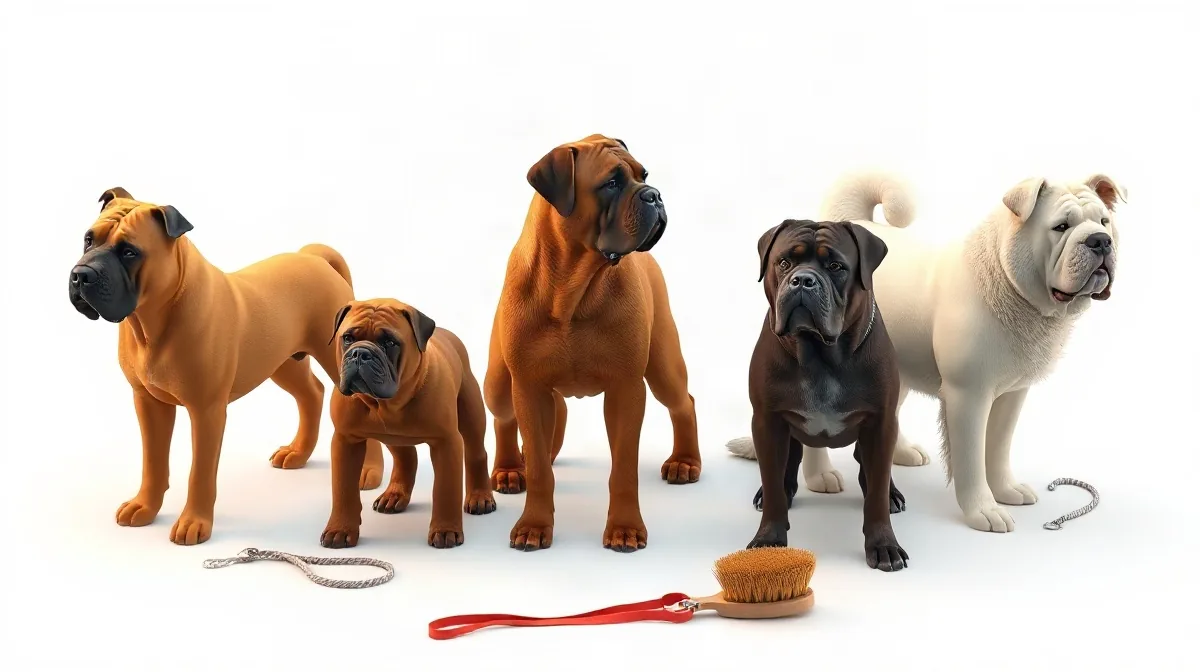
Mastiff breeds are large, powerful dogs, but their size, temperament and care needs vary by breed and individual. Most need thoughtful training, space to move and owners prepared for their substantial food, grooming and veterinary needs.
The name “mastiff” covers more than one kind of dog, so size alone does not tell you what living with one will be like. Temperament, exercise needs and health considerations matter just as much when you are choosing a breed.
This guide compares mastiff breeds and explains what to consider before bringing one home, from everyday care to the commitment of raising a giant dog.
| Breed | Size or weight context | Care point |
|---|---|---|
| English Mastiff | Giant; 120 to 230 pounds | Calm and affectionate; plan for space and handling |
| Bullmastiff | 100–130 pounds | Considerable exercise and mental stimulation |
| Cane Corso | 70–150 pounds; muscular | Plenty of exercise and consistent training |
| Neapolitan Mastiff | Extra large | Account for its substantial size |
| Tibetan Mastiff | 100–130 pounds | Fluffy double coat; plan for grooming |
- 120 to 230 pounds Typical adult English Mastiff weight
- 100–130 pounds Bullmastiff weight
- 70–150 pounds Cane Corso weight
- 37.5% Share of recorded Bull Mastiff deaths attributed to cancer in the cited figure
How do breed histories help you compare mastiffs?
Breed histories help you compare mastiffs by showing that the English Mastiff, Bullmastiff, Cane Corso, Neapolitan Mastiff and Tibetan Mastiff are distinct breeds, not interchangeable dogs simply because they share imposing size.
- English Mastiff: Britain’s giant, broad-bodied Mastiff has a different history and build from the Bullmastiff.
- Bullmastiff: A separate British breed; its needs should not be inferred from the English Mastiff’s size.
- Cane Corso: A muscular breed with its own exercise and training requirements.
- Neapolitan Mastiff: Recognisable for its wrinkled appearance, not a substitute for another mastiff’s care profile.
- Tibetan Mastiff: Its fluffy double coat brings different grooming considerations.
The Kennel Club records a striking point in English Mastiff history: after a number of Mastiffs were exported to North America between the wars, by the end of the Second World War only a single bitch, Nydia of Frithend, remained in Britain.
History is context, not a temperament test
A breed’s past can explain why types differ, but it cannot guarantee how a particular dog will behave at home. Assess the individual dog’s behaviour and ask the breeder for information about its temperament, care needs and background before deciding whether it fits your household.
Which mastiff breed fits your space and handling capacity?
The best mastiff for your home is the one whose adult size and strength every household member can safely manage, with enough clearance for daily movement and transport.
- English Mastiff: A giant, broad, heavy dog weighing 120 to 230 pounds. Check that the dog can move through your doorways, fit into your vehicle, and be handled safely during ordinary routines.
- Bullmastiff: Smaller than an English Mastiff at 100–130 pounds, but still a substantial dog. Plan for room at home and confident handling on walks.
- Cane Corso: Weighing 70–150 pounds, this muscular breed needs handlers who can manage its strength. Make sure everyone expected to walk the dog can control it safely.
- Neapolitan Mastiff: An extra-large dog; consider whether your home and daily handling arrangements can accommodate that size.
- Tibetan Mastiff: Weighing 100–130 pounds, this breed has a fluffy double coat. Account for both its size and coat care when deciding whether it fits your household.
How should you match temperament, exercise and grooming?
Match mastiff care to the individual dog: plan daily activity and training around its needs, make room for its size, and choose grooming that suits its coat.
Daily routine
- English Mastiff: Calm and affectionate with family, this giant dog still needs enough space and handling you can manage safely. Temperament alone is not a measure of whether your home or routine is suitable.
- Bullmastiff: Build both considerable exercise and mental stimulation into the daily routine. Activity without purposeful engagement leaves one of its needs unaddressed.
- Cane Corso: This breed needs plenty of exercise and consistent training. Choose a Cane Corso only if you can provide both reliably as part of everyday life.
Coat care
The Tibetan Mastiff’s fluffy double coat needs more coat care than a short-coated dog. Before choosing an individual dog, ask how much it sheds and what grooming routine it is used to; coat type is a starting point, not a complete care plan.
What health risks should you weigh before choosing a mastiff?
Before choosing a Mastiff, weigh the reported cancer figures alongside the individual dog’s family history, veterinary records and health-screening results; the figures are not a prognosis for any one dog.
The Mastiff Club of America (2020a) suggested that cancer is present within 50% of Mastiff breeds and 27% of all recorded deaths, including 37.5% for Bull Mastiffs, by Adams et al. (2010). Use these figures to guide questions, not to predict your dog’s health.
What to ask before adoption
- Breeder or rescue: Ask for the dog’s health history and veterinary records. Request clarification about cancer in the dog’s family and which relevant health screenings have been completed.
- Your veterinarian: Discuss the dog’s breed and size, and review the records together. A veterinarian can help you understand which screening or follow-up questions apply to that individual dog.
What should you check before bringing a mastiff home?
Before bringing a Mastiff home, check local dog rules and housing restrictions, then make sure your home, transport and daily handling can accommodate a large dog.
Rules can vary by location and may apply to a dog’s appearance as well as its breed. The ASPCA notes that regulated breeds in some areas can include Mastiffs and dogs that simply resemble listed breeds; restrictions may also cover mixes.
- Local rules: Ask the relevant local authority whether breed restrictions apply to the specific dog, including any mix or appearance-based definition.
- Housing: Ask your housing provider how its rules apply before signing an adoption agreement.
- Home and transport: Check that the dog has a workable sleeping space and can be transported safely.
- Routine handling: Consider whether you can manage the dog during everyday care and movement around your home.
When is a mastiff the wrong match?
A mastiff is the wrong match if you cannot safely manage its size at home, on walks and during transport. A powerful dog that is difficult to guide or fit into your vehicle can make ordinary routines unsafe and impractical.
- Cane Corso: Choose another breed if you cannot provide consistent training and plenty of exercise.
- Bullmastiff: Its smaller size compared with an English Mastiff does not mean it needs little engagement; it still needs exercise and mental stimulation.
- Tibetan Mastiff: Its double coat takes more grooming attention than a short coat, so consider whether that care fits your routine.
Breed descriptions are a starting point, not a promise about an individual dog. Before committing, meet the dog and confirm its exercise, training and grooming needs, as well as whether you can handle it safely in your home and during transport.
Frequently asked questions
Which mastiff breed is the largest?
Do mastiff breeds all need the same amount of exercise?
Which mastiff has a fluffy double coat?
Can local rules restrict Mastiffs?
Sources
- petful.com — “Mastiff: Temperament, Size, Types, Cost and Breed Guide”
- Chewy — “11 Mighty Mastiff Dog Breeds to Know”
- PetMD — “11 Mastiff Breeds for People Who Love Big Dogs”
- Hill’s Pet US — “English Mastiff Dog Breed Guide”
- Zoom Room — “English Mastiff Training Tips & Guide”