
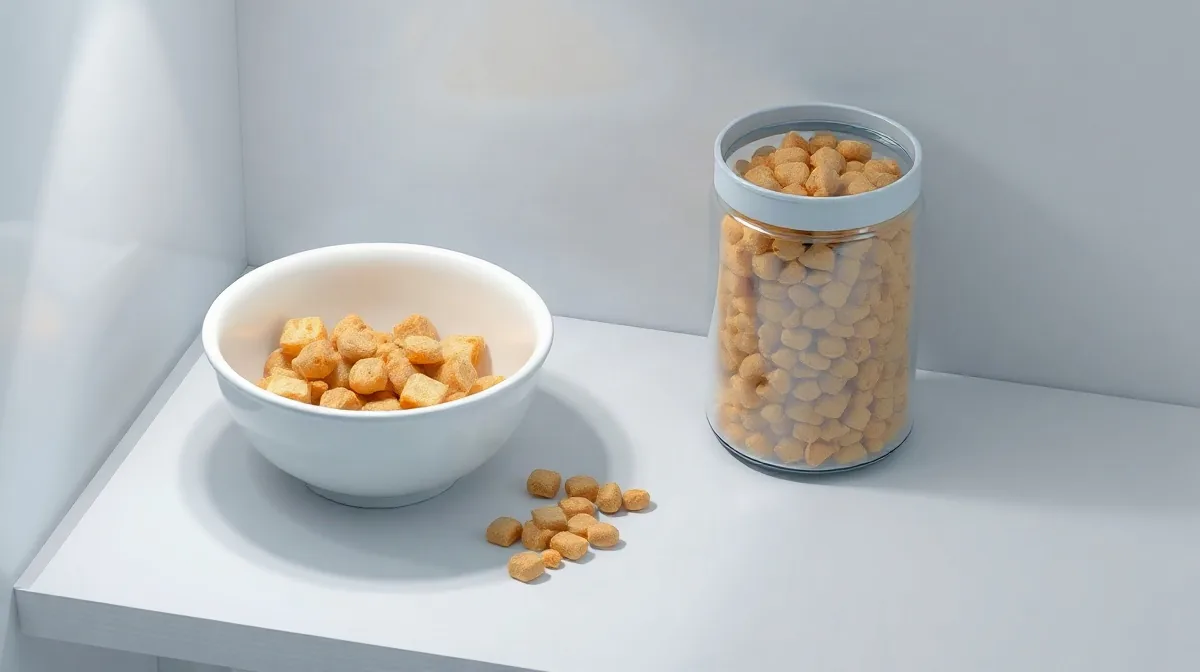
Neither fresh dog food nor kibble is best for every dog: choose a complete, balanced diet your dog tolerates and you can serve consistently. Fresh food may suit dogs who prefer it, while kibble is often easier to store and portion.
Fresh food and kibble differ in preparation, storage and texture, but the label matters more than the format. Check that the food is intended to be complete and balanced for your dog’s life stage, and consider any health needs with your veterinarian.
The right choice also has to work in your household. Compare the feeding instructions, storage requirements and cost, then watch how your dog eats and responds as you make any change gradually.
| Criterion | Fresh-cooked food | Kibble |
|---|---|---|
| Moisture | Typically 65–75% | 6-10% in the current comparison |
| Storage | Refrigerated or frozen | Shelf-stable |
| Processing | Gently cooked | Extruded; most moisture removed |
| Typical monthly cost for a 50 lb adult dog | $150–$250/month for fresh-cooked subscriptions | $40–$90/month for premium kibble |
- 65–75% moisture Typical fresh meals
- 6-10% moisture Kibble in the current comparison
- $40–$90/month Premium kibble for a typical 50 lb adult dog
- $150–$250/month Fresh-cooked subscriptions for a typical 50 lb adult dog
- roughly 16% Commercial raw pet food samples with Salmonella in FDA testing between 2014 and 2017
What differs nutritionally between fresh food and kibble?
Fresh dog food and kibble differ mainly in moisture and processing: fresh meals typically contain 65–75% moisture, while kibble contains 6-10%.
That extra water can support hydration and help food move through your dog’s digestive tract. Moisture alone, however, does not show whether a meal provides complete nutrition; check that the food is nutritionally adequate for your dog.
- Fresh meals: Higher moisture and a softer texture; the water content may help with hydration and digestive movement.
- Kibble: Made by extrusion, which eliminates harmful bacteria but removes most moisture and changes the food’s texture.
These differences do not make one format automatically more suitable. Choose based on nutritional adequacy for your dog, rather than package terms such as “fresh” or “whole ingredients.” Check the product’s nutritional information and whether it is appropriate for your dog’s needs.
How much more does fresh food cost?
For a typical 50 lb adult dog, premium kibble costs $40–$90/month, while fresh-cooked subscriptions cost $150–$250/month. Fresh food therefore takes a substantially larger share of the food budget.
- Premium kibble: Shelf-stable and typically less expensive, it is easier to keep on hand without managing refrigerated or frozen deliveries.
- Fresh-cooked subscriptions: The Farmer’s Dog, Ollie, Nom Nom and Spot & Tango ship gently cooked meals by subscription; the food arrives refrigerated or frozen and needs suitable storage.
The price comparison depends on how much your dog needs, not just the listed monthly range. Your dog’s portion requirement affects how quickly a delivery is used, and you need enough refrigerator or freezer space to store it safely.
Balancing cost and convenience
A mixed routine can combine fresh meals with kibble’s shelf stability and lower cost. But adding foods together does not automatically make the overall diet nutritionally appropriate.
Before combining them, ask your veterinarian how to keep the portions and overall diet balanced for your dog. Check the subscription’s storage and handling instructions, too, so you can confirm that each delivery will fit your household’s storage options.
What does the calorie comparison tell you?
A calorie comparison shows that kibble provides about 55–60 fewer absorbed calories for a 50 lb dog eating 1,160 kcal/day.
That difference is real but small in practical terms. It does not establish that kibble or fresh food is better for an individual dog: the right choice depends on the dog’s needs, and calorie figures alone do not determine how a diet will suit them.
Before changing portions
Your veterinarian can assess your dog’s calorie needs and body condition before you change portion sizes or combine fresh food with kibble. Bring the foods’ feeding instructions so you can discuss how to adjust the portions together.
When can fresh food create extra safety risks?
Fresh food can create extra safety risks when its storage needs are missed or when the diet is raw rather than cooked. Fresh-cooked meals need refrigeration or freezing, unlike shelf-stable kibble; follow the specific product’s storage and handling directions.
Raw pet food is a separate choice from cooked fresh food because it carries a distinct pathogen concern. The FDA tested commercial raw pet foods between 2014 and 2017 and found Salmonella in roughly 16% of samples and Listeria monocytogenes in approximately 8%.
Check the product and your household routine
- Fresh-cooked food: Check whether the product must be refrigerated or frozen, and follow its directions for storage and handling.
- Commercial raw food: Treat the FDA findings as evidence about the tested raw products, not every cooked fresh diet.
- Household handling: Ask about the specific product and consider whether its storage and handling requirements fit your household’s routine.
For any fresh diet, the product’s label is the practical guide. Keep raw and cooked options distinct when assessing pathogen concerns, and check the handling instructions before choosing.
What should you ask your veterinarian before switching?
Ask your veterinarian whether the exact fresh food or kibble is complete for your dog’s needs, rather than assuming fresh ingredients make a meal nutritionally adequate.
Your dog’s health, current food and feeding amount all matter when choosing a format. Tell your veterinarian what your dog eats now and raise any reason you are considering fresh food or kibble—or think one may not suit your dog. That gives them the context to assess the specific product and its fit for your dog.
Before changing the food
- Product suitability: Ask whether the food is complete for your dog’s needs and how to assess its nutritional adequacy.
- Transition and portions: Ask how to introduce the new food and how much to serve. If you plan to combine fresh meals with kibble, ask how to portion both together.
- Kibble assessment: Brands that meet WSAVA guidelines provide a strong benchmark. Ask your veterinarian how to evaluate the particular kibble you are considering against that benchmark.
Have the product label and your dog’s current feeding details ready for the conversation; if you plan to mix formats, ask for portions for each food.
Frequently asked questions
Is fresh food automatically more nutritious than kibble?
Does kibble cost less than fresh food?
Can I feed fresh food and kibble together?
Is raw food the same as cooked fresh food?
Key takeaways
- Fresh meals typically contain 65–75% moisture; kibble is described at 6-10%.
- Premium kibble runs $40–$90/month versus $150–$250/month for fresh-cooked subscriptions for a typical 50 lb adult dog.
- Fresh-cooked subscription food needs refrigerated or frozen storage; kibble is shelf-stable.
- Ask your veterinarian about the exact diet, portions and suitability for your dog.
Sources
- TailTrums — “Fresh Dog Food vs Kibble: Which Is Better for Your Dog?”
- Vetstreet — “Is Fresh Dog Food Easier to Digest? – Vetstreet”
- akc.org — “Fresh vs Raw Dog Food vs Kibble: Which Diet Is Best For Your Dog?”
- The Honest Kitchen — “Fresh Food for Dogs: Is It Worth It?”
- ethelia.com — “The Complete Ranking of Dog Food Processing Methods: From D-Tier to S-Tier – Ethelia Petfoods”