
Updated: October 13, 2026
What Are Dog Herding Instincts and How Do They Influence Behavior?
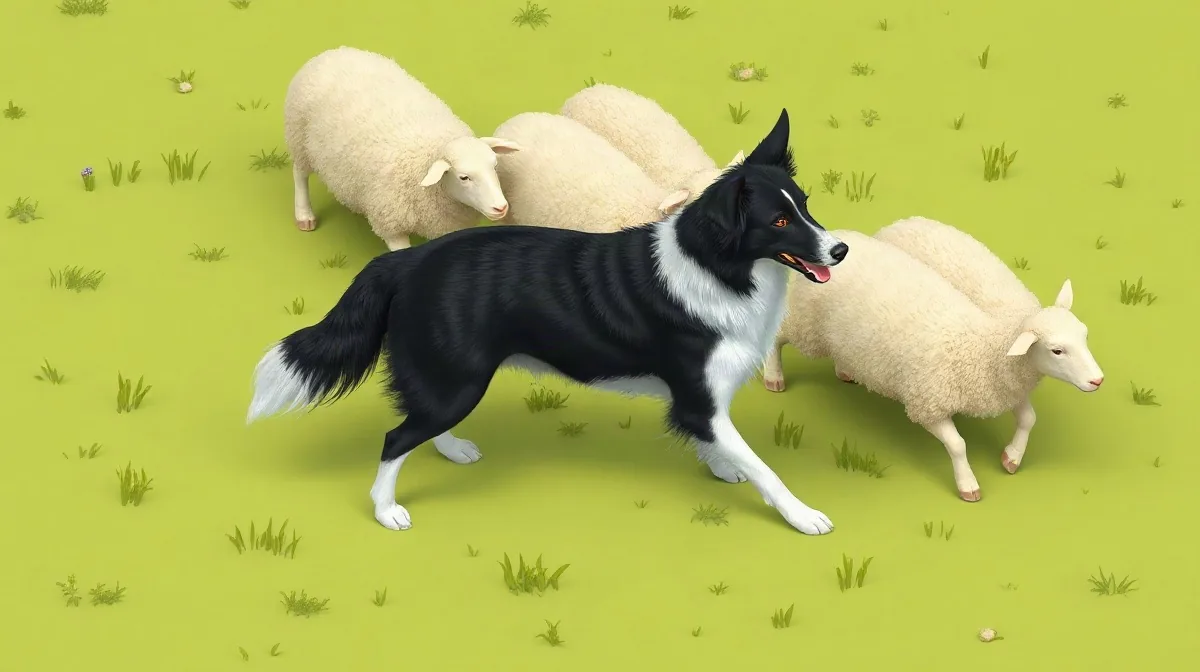
Herding is a sequence of predatory behaviors—orienting, watching, stalking, chasing and sometimes gripping—that generations of selective breeding reshaped for moving livestock. A herding dog may fix its gaze on a moving bicycle, circle children at play or nip at heels; these actions are not proof of a dog being “dominant,” but signs that motion triggers an inherited response. Training can change what the dog does next, though it does not erase the underlying motivation.
Instinct varies among individuals, even within one litter. A Border Collie bred for sheep work may show a strong crouch and eye, while another dog of the same breed is less interested in stock. Exercise needs also depend on age, health and temperament: the American Kennel Club describes Border Collies as high-energy, but no single daily-hour prescription suits every dog. Watch for relaxed recovery after activity rather than escalating games that leave a dog more keyed up.
Which Breeds Exhibit the Strongest Herding Instincts?
The American Kennel Club’s Herding Group includes breeds developed to move or control livestock, but their working styles differ. Border Collies commonly gather stock with a low posture and intense gaze; Australian Cattle Dogs were developed for driving cattle and may use a heel nip; German Shepherd Dogs were bred for herding and later became widely associated with police and service work. Belgian Malinois are energetic working dogs, while Old English Sheepdogs have a heavier build and a history as drovers. Breed labels are clues, not guarantees of an individual dog’s behavior.
Breed traits to consider
- Border Collie: Often uses eye, stalking and circling; needs training that builds calm disengagement as well as activity.
- Australian Shepherd: A versatile ranch breed, typically alert and active; “Australian” refers to breed development in the United States, not its country of origin.
- German Shepherd Dog: A substantial herding and working breed; responsible exercise should account for joints and overall conditioning.
- Belgian Malinois: A high-drive Belgian herding breed whose intensity can be a poor match for inexperienced owners without structured work.
- Old English Sheepdog: A large British drover with a shaggy coat that requires regular grooming, in addition to exercise and training.
| Breed | AKC adult size reference | Historical working style |
|---|---|---|
| Border Collie | 30–55 lb (14–25 kg) | Gathering sheep; eye and controlled chase |
| Australian Cattle Dog | 35–50 lb (16–23 kg) | Driving cattle; heel-nipping style |
| German Shepherd Dog | 50–90 lb (23–41 kg) | Herding and versatile working tasks |
| Belgian Malinois | 40–80 lb (18–36 kg) | Herding and demanding working roles |
| Old English Sheepdog | 60–100 lb (27–45 kg) | Driving livestock to market |
How Do Herding Instincts Affect Training Approaches?
Use reward-based training to teach a dog what to do when movement catches its attention. The American Veterinary Society of Animal Behavior’s 2021 humane dog-training position statement recommends reward-based methods and cautions against aversive techniques. Start with practical cues such as “come,” “leave it,” “settle” and a hand target, then practise around gradually increasing distractions at a distance where the dog can still respond. Reinforce looking back at the handler rather than chasing.
Training priorities for herding dogs
- Impulse control: Reward pauses and calm observation before releasing the dog to a permitted game.
- Reliable recall: Practise on a long line before considering off-leash freedom; a fenced area is safer near roads or livestock.
- Socialization: The AVSAB recommends safe, positive exposure during puppyhood; its guidance says puppy classes can begin at 7–8 weeks after at least one vaccine given 7 days beforehand and deworming.
- Stock work: If pursuing herding, choose an experienced instructor and suitable livestock; do not use children, pets or traffic as practice targets.
There is no evidence-based rule that specialized herding lessons should begin at 12 weeks. Build foundation skills early, but introduce livestock work according to the puppy’s confidence, physical development and the instructor’s assessment.
What Are the Exercise Needs of Herding Breeds?
Daily needs are individual, so treat “one to two hours” as a rough planning range often suggested for healthy adult, active dogs—not a universal minimum or a substitute for veterinary advice. Split activity into walks, sniffing, short training sessions and play. Puppies need brief, age-appropriate experiences with rest; repetitive jumping and forced running are poor choices for growing joints. Older dogs and dogs with arthritis, heart disease or heat sensitivity need plans set with a veterinarian.
Variety matters more than simply exhausting a dog. Try food-search games, scent work, trick training or a well-run agility class, with warm-ups and breaks. A KONG Classic or Nina Ottosson puzzle feeder can provide food enrichment; prices vary by size and retailer, so check current listings rather than relying on an old price estimate. Fetch and herding balls can intensify chasing, so include pauses and reward disengagement.
Why Is Understanding Herding Instincts Important for Dog Owners?
Recognizing the trigger behind chasing or heel-nipping helps owners prevent rehearsal and teach a safer alternative. A dog that repeatedly chases joggers can be walked at a greater distance, rewarded for turning toward its handler and gradually trained around controlled movement. For children, use gates or a leash and active adult supervision; do not expect a dog to manage fast-moving play safely on its own.
Turn the instinct into manageable behavior
- Notice patterns: Record what sets off staring, circling or chasing—such as scooters, running children or livestock.
- Manage first: Use a leash, secure fence or visual barrier to prevent unsafe practice while training.
- Reward an alternative: Teach the dog to come away, touch a hand or settle on a mat.
Sudden behavior changes, persistent anxiety or bites warrant a veterinary check and help from a qualified reward-based behavior professional. The American College of Veterinary Behaviorists and the Certification Council for Professional Dog Trainers are examples of organizations owners can use when assessing professional credentials.
Frequently asked questions
Can non-herding breeds have herding instincts?
How can I safely exercise a herding dog?
Are herding dogs suitable for apartment living?
What is the best age to start training a herding dog?
Key takeaways
- Herding behavior is a modified predatory sequence shaped by selective breeding, not a guarantee that every dog of a named breed will herd.
- Border Collies, Australian Cattle Dogs, German Shepherd Dogs, Belgian Malinois and Old English Sheepdogs differ in working style and adult size.
- Reward-based training can teach dogs to disengage from movement; AVSAB’s 2021 position statement favors humane, reward-based methods.
- Exercise should fit the dog’s age, health and recovery, combining movement with sniffing, rest and mental tasks.
- Prevent unsafe chasing with management, especially around children, roads and livestock.
Conclusion
Herding instincts help explain why some dogs fixate on motion, circle, chase or nip, but the behavior is shaped by both breeding and experience. Owners can protect people and animals while meeting a dog’s needs through secure management, reward-based skills and varied activity. For prospective owners, compare the demands of a specific breed—such as the Border Collie’s gathering style or the Australian Cattle Dog’s driving work—with the time and training they can realistically provide.