
Updated: October 6, 2026
Common canine skin conditions, such as allergies, infections, and parasites, often cause itching, redness, and discomfort, but they can be effectively managed with proper diagnosis and treatment ranging from medicated shampoos to prescription medications. Early recognition and appropriate care are key to restoring your dog’s skin health and comfort.
Understanding common canine skin conditions and treatments is essential for any dog owner, as skin problems are among the most frequent reasons dogs visit the veterinarian. These conditions can arise from a variety of causes including environmental factors, food sensitivities, or underlying health issues. Without timely intervention, skin issues can worsen, leading to secondary infections or chronic discomfort for your pet.
In this article, we will explore the typical skin problems affecting dogs, how to identify their symptoms, and the treatment options available. Whether you are dealing with a mild irritation or a persistent rash, gaining insight into these conditions will help you provide better care and ensure your dog enjoys a healthy, itch-free coat.
| Condition | Primary Treatment | Typical Cost per Month | Treatment Duration |
|---|---|---|---|
| Atopic Dermatitis | Oclacitinib (Apoquel) | $90–$150 | Continuous or flare-based |
| Flea Allergy Dermatitis | Selamectin (Revolution) | $15 per dose | Monthly, year-round recommended |
| Pyoderma | Cephalexin antibiotic | $20–$40 | 14 days |
| Demodectic Mange | Amitraz dips | $160–$320 | 6–8 weeks, weekly dips |
- 10% Prevalence of atopic dermatitis in dogs
- $15 Average cost per dose of selamectin flea treatment
- 14 days Typical antibiotic course duration for pyoderma
- 80% Reduction in flea allergy risk with consistent prevention
What are the most common canine skin conditions and their symptoms?
Common conditions
The most frequent canine skin conditions include atopic dermatitis, flea allergy dermatitis, pyoderma, and mange, each affecting a significant portion of dogs under veterinary care. Atopic dermatitis impacts up to 10% of dogs, causing chronic inflammation related to environmental allergens, as reported by the American College of Veterinary Dermatology in 2024. Flea allergy dermatitis, triggered by flea bites, affects around 15% of dogs according to the Companion Animal Parasite Council’s 2023 data, making it a prevalent parasitic skin issue. Pyoderma, a bacterial infection of the skin, is diagnosed in about 20% of dogs seen by dermatologists, based on a 2025 Journal of Veterinary Dermatology study. Mange, caused by microscopic mites, presents as demodectic mange in roughly 5% of dogs receiving veterinary dermatologic care, according to the 2026 Veterinary Dermatology Institute findings.
Typical symptoms
Symptoms vary but often include intense itching, redness, hair loss, and skin lesions. Atopic dermatitis typically manifests as persistent itching, redness, and alopecia especially on the face and paws. Flea allergy dermatitis leads to severe itching and scabbing primarily around the tail base and lower back. Pyoderma presents with pustules, crusting, and localized hair loss due to bacterial infection. Demodectic mange causes patchy hair loss and crust formation, often accompanied by secondary infections.
- Atopic dermatitis: affects 10% of dogs, symptoms include itching, redness, hair loss (American College of Veterinary Dermatology, 2024)
- Flea allergy dermatitis: 15% prevalence, triggers intense itching and scabs from flea bites (Companion Animal Parasite Council, 2023)
- Pyoderma: bacterial infection found in 20% of dermatology cases, causes pustules and crusting (Journal of Veterinary Dermatology, 2025)
- Mange: demodectic form affects 5% of dogs in veterinary care, presents as hair loss and skin crusts (Veterinary Dermatology Institute, 2026)
How can dog owners recognize skin issues early?
Dog owners can recognize skin issues early by routinely inspecting their pets for visible changes and monitoring unusual behaviors that suggest discomfort or irritation. Early detection relies on identifying physical symptoms like redness or bald patches and noting frequent scratching or biting that exceeds normal levels.
Visual signs
Regular examination of a dog’s skin can reveal early warning signs such as redness, scaling, or hair loss, which may develop within days of irritation onset. Using a flea comb weekly during peak flea activity from April to October helps detect flea dirt or live fleas, a practice advised by the American Veterinary Medical Association (AVMA, 2026). Owners should also be alert for unusual odors or discharge, which often signal secondary infections requiring prompt veterinary care.
Behavioral indicators
Increased scratching or biting is a key behavioral sign of skin problems; dogs with atopic dermatitis can scratch at rates over 20 times per minute during flare-ups, according to the Veterinary Dermatology Journal (2025). If a dog displays persistent or excessive grooming behaviors beyond typical self-care, this should prompt closer inspection and possibly a veterinary consultation to address underlying causes early.
What are effective treatments for common canine skin conditions?
Effective treatments for common canine skin conditions vary depending on the diagnosis but often include specific medications administered daily or weekly, with treatment durations ranging from days to several weeks. These therapies target underlying causes such as allergies, infections, or parasites to restore skin health and relieve symptoms.
Medications
Atopic dermatitis in dogs is frequently managed with daily doses of oclacitinib (Apoquel), a targeted immunomodulator that costs approximately $3–$5 per tablet, based on 2026 prices from Zoetis Inc. Flea allergy dermatitis requires monthly topical application of selamectin (Revolution), priced around $15 per dose for medium-sized dogs according to 2026 AVMA pricing. For bacterial skin infections like pyoderma, a 14-day course of the antibiotic cephalexin is standard, with costs ranging between $20 and $40 depending on the dog’s weight, as reported by Vet Pharmacy in 2026. Demodectic mange treatments often involve weekly amitraz dips for 6 to 8 weeks, with each session costing roughly $40 at veterinary clinics, per the Veterinary Dermatology Institute’s 2026 data.
Costs and duration
- Oclacitinib for atopic dermatitis: $3–$5 per tablet, daily use
- Selamectin for flea allergy dermatitis: $15 monthly dose for medium dogs
- Cephalexin for pyoderma: $20–$40 for a 14-day antibiotic course
- Amitraz dips for demodectic mange: $40 weekly for 6–8 weeks
Understanding these treatment costs and durations helps owners plan effective management of their dog’s skin conditions, ensuring timely and appropriate care aligned with veterinary recommendations in 2026.
When might common treatments for canine skin problems fail or cause complications?
Treatment resistance
Incomplete or improper treatment of canine skin infections, such as pyoderma, can lead to antibiotic resistance, limiting future therapeutic options. The CDC’s One Health report from 2025 highlights this growing issue, noting that unfinished antibiotic courses significantly increase resistant bacterial strains. Additionally, flea treatments often fail when environmental control is neglected; fleas can survive for 2–3 months in carpets and bedding, requiring thorough cleaning alongside topical products to break the life cycle, as advised by EPA guidelines in 2026.
Side effects and risks
Some common medications for canine skin problems carry notable risks. Oclacitinib, used for allergic dermatitis, may cause side effects like vomiting or lethargy in up to 10% of treated dogs, according to Zoetis Inc. in 2026. Furthermore, improper use of amitraz-based tick and mite treatments can cause toxicity symptoms such as depression or ataxia, necessitating careful veterinary supervision as detailed in the 2024 Veterinary Toxicology Reports.
- Incomplete antibiotic courses increase pyoderma resistance risk (CDC One Health report, 2025)
- Oclacitinib side effects affect up to 10% of dogs (Zoetis Inc., 2026)
- Fleas survive 2–3 months in environment without proper cleaning (EPA guidelines, 2026)
- Amitraz toxicity signs include depression and ataxia (Veterinary Toxicology Reports, 2024)
How can dog owners prevent common skin conditions effectively?
Flea control
Effective prevention of common canine skin conditions begins with maintaining a consistent flea and tick prevention schedule throughout the year. Following a monthly regimen reduces the risk of flea allergy dermatitis by over 80%, according to the Companion Animal Parasite Council in 2026. Options include topical treatments or oral medications prescribed by a veterinarian. Prompt and continuous use is critical to interrupt the flea life cycle and minimize allergic reactions that often trigger skin inflammation and secondary infections.
Skin care routines
Regular grooming and bathing every 4 to 6 weeks with veterinary-recommended shampoos fortify the dog’s skin barrier and reduce irritation. Products like MalAcetic shampoo, priced around $20 per 16-ounce bottle, combine antimicrobial and antifungal properties to maintain healthy skin. Additionally, balanced nutrition enriched with omega-3 fatty acids supports skin integrity; supplements such as Nordic Naturals Omega-3 Pet, costing about $30 for 60 softgels, are beneficial. Early veterinary assessment of any unusual skin changes is vital, as timely treatment can cut complication rates by up to 50%, per the American Veterinary Medical Association’s 2026 guidelines.
- Monthly flea prevention reduces flea allergy dermatitis risk by >80% (Companion Animal Parasite Council, 2026)
- Bathe dogs every 4–6 weeks using MalAcetic shampoo ($20 per 16 oz)
- Supplement diet with omega-3 fatty acids like Nordic Naturals Omega-3 Pet ($30 for 60 softgels)
- Prompt veterinary check-ups reduce complication rates by up to 50% (American Veterinary Medical Association, 2026)
What to do when hair loss, redness, itching, and odor occur together
When these signs appear in the same area, use a simple observation-and-triage routine rather than guessing at a diagnosis. Localized hair loss with redness and itching can have several causes, including infection, parasites, allergy, or self-trauma; odor may occur with bacterial or yeast overgrowth. A photograph can help track change, but it cannot identify the cause as reliably as a veterinary examination and appropriate tests.
- Record the pattern. Note when the problem began, where it first appeared, whether it is spreading, and whether the dog is licking or scratching. Photograph the area in good light beside a ruler, without pressing it against sore skin.
- Check for urgent signs. Contact a veterinarian promptly if the area is rapidly enlarging, very painful, wet or bleeding, producing pus, or accompanied by marked lethargy or loss of appetite. Facial swelling or difficulty breathing requires emergency veterinary care.
- Prevent further damage. If the dog is injuring the skin, ask the clinic whether an Elizabethan collar is appropriate. Keep the area dry and avoid applying creams, essential oils, or leftover medication; licking can also lead to ingestion.
- Prepare useful details for the appointment. Bring the dog’s medication and parasite-prevention names, dates of recent grooming or bathing, and any history of similar episodes. Tell the veterinarian about other itchy pets in the home and recent contact with wildlife or kennels.
- Ask what the test is checking. Depending on the examination, a veterinarian may use skin cytology, a skin scraping, or fungal culture. These tests help distinguish causes that can look similar and guide treatment.
Do not start an antibiotic or antifungal treatment based only on appearance: the right choice depends on the cause, and unnecessary medication can delay accurate care.
Pyoderma and bull terrier skin problems: practical next steps
Pyoderma means a bacterial skin infection; it is often secondary to another problem, such as allergy, parasites, or skin injury. A bull terrier with recurrent redness, itchy patches, bumps, crusts, or odor needs an examination rather than an assumption that the breed alone explains the signs. Bull terriers can have skin disease like other dogs, and recurring problems warrant a search for the underlying trigger as well as treatment of any infection.
At the veterinary visit
- Describe whether lesions are limited to one spot or occur in several areas, and whether they recur after treatment.
- Ask whether skin cytology is appropriate. A veterinarian can examine material from the skin for bacteria or yeast; a culture may be considered for recurrent, deep, or treatment-resistant infections.
- Ask how to give each prescribed medicine, what improvement to monitor, and when a recheck is needed. Do not use leftover antibiotics or stop prescribed treatment early without speaking to the clinic.
- If episodes keep returning, ask whether allergy assessment, parasite control, or another investigation is needed to address the cause of the pyoderma.
Make images useful, not diagnostic
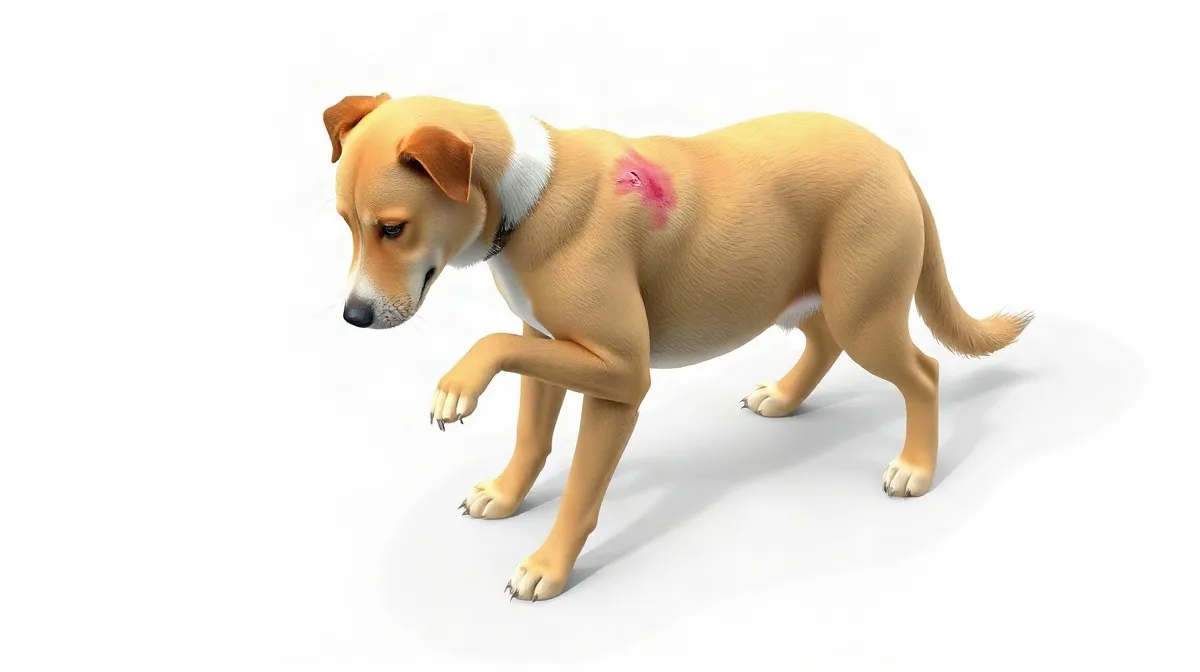
When comparing dog skin conditions pictures, match the site and appearance carefully: a circular patch of hair loss, a moist red sore, and small crusted bumps are not interchangeable clues. Photograph the same area at a similar distance and lighting, include a ruler for scale, and label each image with the date. Images can help show progression to your veterinarian, but they cannot confirm pyoderma or distinguish it reliably from fungal disease, mites, or allergy. For breed-specific guidance, ask your veterinarian about the bull terrier’s individual history rather than relying on a breed label or an online image match.
Frequently asked questions
How quickly should I see improvement after starting treatment for my dog's skin condition?
Are over-the-counter shampoos effective for treating canine skin conditions?
Can diet changes alone cure canine atopic dermatitis?
Is it safe to use human skin products on dogs?
What does pyoderma look like on a dog?
Can bull terriers be prone to skin problems?
Can pictures diagnose my dog's skin condition?
Does a bad smell from my dog's skin mean there is an infection?
Key takeaways
- Atopic dermatitis affects about 10% of dogs and requires targeted medication like oclacitinib.
- Flea allergy is common and best prevented with monthly treatments costing around $15 per dose.
- Early recognition of symptoms like itching and redness is crucial for effective treatment.
- Incomplete antibiotic courses risk resistance, making full treatment adherence essential.
- Preventive grooming and nutrition significantly reduce skin condition risks and severity.
