
Updated: October 22, 2026
What are the key physical differences between Bull Terriers and Staffordshire Bull Terriers?
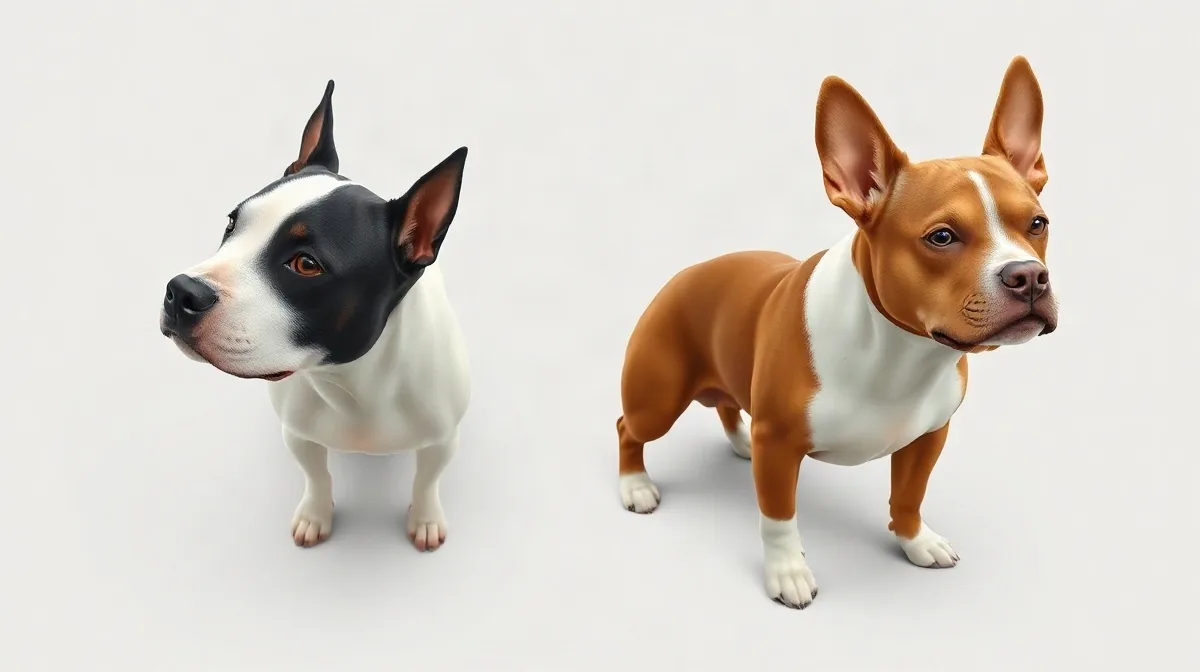
Bull Terriers and Staffordshire Bull Terriers are both muscular breeds but differ markedly in size and head shape, which are primary identifiers recognized by major canine organizations such as the American Kennel Club (AKC) and The Kennel Club (UK).
Adult Bull Terriers typically weigh between 22 and 38 kilograms (48 to 84 pounds) and stand 45 to 55 centimeters (18 to 22 inches) tall at the shoulder. Their most striking feature is the unique egg-shaped head, characterized by a convex profile and small, deep-set triangular eyes. This distinctive head shape has been standardized since the breed’s recognition by the AKC in 1991.
In contrast, Staffordshire Bull Terriers are smaller and more compact, weighing 11 to 17 kilograms (24 to 38 pounds) and standing around 35 to 40 centimeters (14 to 16 inches) tall. Their heads are broad and flat with pronounced cheek muscles and medium-sized round eyes, lending a more traditional terrier appearance.
Distinctive physical traits
- Bull Terrier: Egg-shaped head, strong muscular frame, short dense coat; coat colors include solid white (common), brindle, black, fawn, red, and tri-color. The AKC standard allows these variations.
- Staffordshire Bull Terrier: Broad, flat skull with powerful jaws, compact and muscular body; coat colors vary widely—black, blue, fawn, red, brindle, and combinations often with white markings.
| Breed | Weight (kg) | Height (cm) | Head Shape | Coat Colors |
|---|---|---|---|---|
| Bull Terrier | 22–38 | 45–55 | Egg-shaped, convex profile | White, brindle, black, fawn, red, tri-color |
| Staffordshire Bull Terrier | 11–17 | 35–40 | Broad and flat | Black, blue, fawn, red, brindle, with white markings |
How do the temperaments of Bull Terriers and Staffordshire Bull Terriers differ?
Bull Terriers are often described as lively and affectionate but can exhibit a strong-willed and sometimes stubborn temperament.
Staffordshire Bull Terriers have a reputation for being affectionate and reliable family companions.
Comparing behavior and social traits
- Bull Terrier: High energy, playful, occasionally stubborn, benefits from structured early socialization and firm training.
- Staffordshire Bull Terrier: Loyal, affectionate, especially good with children, requires moderate daily exercise and thrives on human interaction.
What are the distinct care requirements for each breed?
Exercise needs differ slightly between the breeds due to their size and energy levels. Bull Terriers require at least 60 minutes of vigorous daily exercise such as running, fetch, or agility training to manage their high energy. Their short, dense coat needs weekly brushing to remove loose hair and maintain skin health, particularly because this breed is prone to atopic dermatitis and other skin allergies.
Staffordshire Bull Terriers generally require 45 to 60 minutes of moderate daily exercise, such as brisk walks and interactive play. Their smooth coat is easy to maintain with weekly brushing. Regular mobility assessments after age five and joint supplements such as glucosamine may be beneficial.
Health and maintenance highlights
- Bull Terrier: Monitor for congenital deafness (especially in white coats), skin allergies; biannual veterinary exams recommended.
- Staffordshire Bull Terrier: Screen for hip and elbow dysplasia, maintain joint health with vet-approved supplements; annual veterinary check-ups advised.
How do the costs of owning a Bull Terrier compare to a Staffordshire Bull Terrier?
Staffordshire Bull Terriers are more widely bred and available, with prices ranging from $800 to $1,800 USD.
| Cost Type | Bull Terrier ($) | Staffordshire Bull Terrier ($) |
|---|---|---|
| Initial Purchase Price | 1,500–3,000 | 800–1,800 |
| Annual Food & Supplies | 1,200–1,800 | 960–1,440 |
| Annual Vet Care (including vaccinations, check-ups) | 500–1,000 | 400–800 |
| Training & Socialization Classes | 300–600 | 200–400 |
What training approaches suit Bull Terriers and Staffordshire Bull Terriers best?
Bull Terriers benefit from firm, consistent training methods combined with positive reinforcement. Early socialization from 8 weeks old is critical to prevent undesirable behaviors stemming from their strong-willed nature. Trainers often recommend reward-based techniques using treats such as Zuke’s Mini Naturals, combined with clear, calm commands to harness their focus.
Staffordshire Bull Terriers respond well to patient, affectionate training styles. According to the International Association of Canine Professionals, Staffordshires excel in obedience and agility when training incorporates socialization and mental challenges like puzzle feeders or scent work. Puppy classes starting at 8 weeks and continued socialization help maintain their friendly disposition toward other dogs and strangers.
Training tips for each breed
- Bull Terrier: Use consistent, firm commands; prioritize early socialization and structured daily exercise.
- Staffordshire Bull Terrier: Employ positive reinforcement; include socialization and mentally stimulating activities.
How should you assess either breed for home-watch duties?</h2>
Neither breed should be chosen or trained as a protection dog on the assumption that size or breed name predicts reliable guarding. Bull Terriers are generally larger, so their appearance may deter some visitors; Staffordshire Bull Terriers are smaller but muscular. Individual dogs vary, and barking at a sound is not the same as safely assessing a person or responding on cue. For most homes, the sensible goal is an alert companion whose behaviour can be managed, not a dog expected to confront an intruder.
A practical decision checklist
- Define the job. If you want notification, teach a brief alert bark and a dependable “quiet” cue. Do not encourage lunging, guarding doorways, or rehearsing confrontations.
- Check the household and property. Consider visitors, children, shared walls, gates, and whether the dog can be separated behind a secure door. A 6-foot (about 1.8-metre) fence is a common residential barrier, but local rules and the individual dog’s jumping ability matter.
- Meet the adult dog or both parents. Ask the breeder or rescue about behaviour around unfamiliar people, handling, and recovery after startling events. Observe the dog at a calm distance; do not stage a threatening test.
- Train safe routines. Practise “place,” recall, leash control, and settling when the doorbell rings. A well-fitted harness and a standard 6-foot (1.8-metre) leash are useful for controlled walks; follow your trainer’s advice on equipment.
- Check obligations before adopting. Ask your insurer about its dog-breed and liability rules, and confirm local council or municipal requirements. In the UK, check the current GOV.UK guidance on the Dangerous Dogs Act; in the United States, rules can differ by state and city.
If you need physical security, use locks, lighting, and an alarm system rather than relying on either dog to defend the home. For aggression or serious guarding, consult a veterinary behaviourist or a qualified reward-based professional, such as a trainer certified by the Certification Council for Professional Dog Trainers (CCPDT).
How can you choose between the breeds for your actual household?</h2>
For a useful bull terrier vs staffordshire bull terrier comparison, match the dog to your daily routine and management capacity—not to a promise that one breed is automatically easier, safer, or more protective. Both are strong, people-oriented terriers, and either may need careful introductions to unfamiliar dogs. Ask breeders or rescues for specific examples of behaviour, health screening, and the dog’s response to ordinary household situations.
Use this situation-by-situation guide
- You live in a flat or have close neighbours: Ask about barking and settling when left alone. Plan for daily walks and enrichment; neither breed should be expected to cope with long isolation without preparation.
- You have resident pets: Arrange controlled, gradual introductions on neutral ground where possible. Ask the rescue or breeder about the dog’s history with dogs and cats; do not assume a successful meeting predicts compatibility in every setting.
- You are a first-time owner: Meet adult dogs as well as puppies, and arrange a reward-based class. The Kennel Club’s Good Citizen Dog Training scheme is one named UK option; in the US, look for a CCPDT-certified trainer or an accredited class using reward-based methods.
- You are considering a puppy: Request the parents’ health-test results and ask which tests are recommended by the relevant national breed club. For Bull Terriers, discuss hearing assessment and kidney and heart screening; for Staffordshire Bull Terriers, ask about breed-relevant DNA tests, including L-2-HGA and hereditary cataracts. The precise panel can vary by country and breeding programme.
- You need a predictable adult companion: A foster-based rescue may be able to describe observed behaviour in a home, while a responsible breeder can explain the parents’ temperaments and socialisation. Neither source can guarantee future behaviour, so plan for a return or support policy.
Before deciding, meet the dog more than once if possible, review veterinary records, and check whether housing rules, insurance, and local regulations permit the breed. Choose the individual whose observed needs fit your experience and schedule.
Frequently asked questions
Are Bull Terriers more aggressive than Staffordshire Bull Terriers?
Which breed is better for families with children?
Do both breeds require similar exercise routines?
What are common health issues in these breeds?
Which breed is more protective of a home, a Bull Terrier or a Staffordshire Bull Terrier?
Can a Bull Terrier or Staffordshire Bull Terrier be a good watchdog in an apartment?
Are Staffordshire Bull Terriers and Bull Terriers the same breed?
Which breed is easier to train, a Staffy or a Bull Terrier?
Key takeaways
- Bull Terriers are larger with a distinctive egg-shaped head and weigh 22–38 kg; Staffordshire Bull Terriers are smaller and more compact at 11–17 kg.
- Staffordshire Bull Terriers are noted for their affectionate, tolerant nature, particularly with children, supported by behavioral studies.
- Bull Terriers require more intense daily exercise and consistent, firm training to manage their energetic and independent temperament.
- Staffordshire Bull Terriers generally incur lower initial purchase prices and maintenance costs.
- Both breeds benefit from early socialization and regular veterinary care tailored to breed-specific health concerns such as deafness and joint dysplasia.
Conclusion
Selecting between a Bull Terrier and a Staffordshire Bull Terrier depends on your lifestyle, household needs, and experience with dogs. If you desire a striking, energetic companion with a unique appearance and are committed to firm training and vigorous daily exercise, the Bull Terrier is a compelling choice. Conversely, if you seek a devoted, gentle family dog known for its affectionate and tolerant demeanor, especially with children, the Staffordshire Bull Terrier is an excellent candidate. Understanding their physical characteristics, temperament, care demands, and ownership costs enables you to provide the best possible environment for your new canine companion.