
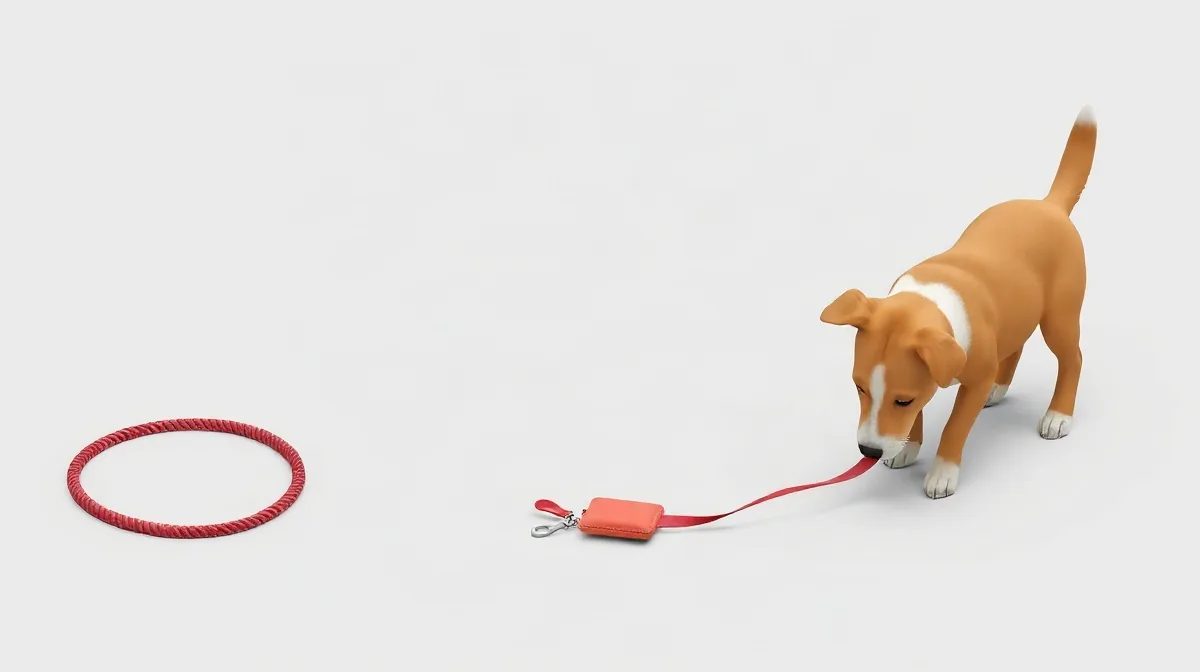
Dogs pull because walking ahead is rewarding and leash pressure has not yet taught them to stay close. Loose-leash walking improves when you reward a slack leash, keep training sessions manageable and make forward movement depend on the leash staying loose.
Pulling can also reflect excitement, fear or a strong interest in something nearby, so the same approach may not suit every dog. Notice what triggers the pulling, then practise in a quiet place before trying busier routes.
| Situation | What the dog may gain | What to do |
|---|---|---|
| Pulling toward a scent | Access to sniffing | Pause; resume when the leash is slack |
| Pulling toward a person or dog | Approach or social contact | Create distance; reward slack before moving closer |
| Pulling in a distracting setting | Movement through the environment | Turn or stop, then practise somewhere quieter |
| Dog walks beside you on a loose leash | Treat and forward movement | Mark the behavior and reward it |
- 120 shake-offs Observed across dogs in public and daycare settings
- 96 dogs Dogs included in the IAABC Foundation Journal shake-off observations
- 12 or 15 steps Backyard example of the interval between treats when the dog is doing well
Why does pulling keep getting rewarded?
Pulling keeps getting rewarded when it gets your dog something she wants: a smell to investigate, a person or dog to approach, or a preferred route to follow.
A dog that reaches a scent while the leash is tight has gained access to that smell, and sniffing can reinforce pulling. Watch what happens immediately after the leash tightens: if you move toward a lamppost, another dog, or a familiar turn, that destination may be the payoff. The reward can be the activity itself, not just food.
Patricia McConnell’s backyard example uses treats to reinforce walking well: when your dog has been doing really well in the back yard, give her a treat every 12 or 15 steps. That interval is an example for a dog already succeeding there, not a reason to wait that long when she is struggling.
Rather than calling pulling dominance, look for the consequence that makes it worthwhile to your dog. If tension leads to a smell or a preferred direction, pause or change course before she gets there; offer access when the leash is loose. Check what follows each tightening, and you can identify the reward to change.
Why does pulling back often make the leash tighter?
Pulling back can make the leash tighter because some dogs lean into opposing pressure instead of stepping towards the handler.
With the NewTrix, opposing force is part of how the equipment works: when the dog pulls forward and you pull back, the pressure can prompt more pulling. The device does not teach the dog what to do instead.
Make slack the way forward
Use a loose leash as the condition for moving ahead. If tension starts, stop or change direction without jerking; continue when the leash slackens. Mark and reward that moment, then resume walking so forward movement follows the behavior you want.
A treat can mark the slack leash, while stopping prevents the dog from reaching a sniff or other destination by pulling. Keep the rule consistent, and practise where your dog can respond before adding more distraction.
How can you reward loose walking without asking too much too soon?
Reward loose-leash walking by marking the first successful step or two in a quiet space, then giving your dog a treat while the leash is slack. Use “Yes!” or a click at the moment the leash stays loose; deliver the treat before asking for more walking.
Patricia McConnell’s backyard example uses a longer stretch once the dog is doing well: give a treat after every 12 or 15 steps. That interval is an example for a dog already succeeding, not a starting target for every dog.
Increase distance only after success
Keep the reward gap short if your dog struggles to stay with you. In a distracting place, a dog who cannot respond is being asked to work at too difficult a level; reduce the challenge or return to a quieter spot before building distance again.
- At the start: Mark and treat after a step or two with a loose leash.
- When walking is going well: Gradually add steps between treats.
- If your dog stops succeeding: Shorten the gap or move somewhere quieter.
Widen the gap only while your dog continues to walk successfully with the leash loose.
When should you pause instead of asking for another step?
Pause and make the situation easier when your dog fixates on a distraction, will not take food, or keeps tightening the leash. These signs suggest the current setting may be too difficult for learning.
The IAABC Foundation Journal describes observing 120 shake-offs across 96 dogs in public and daycare settings. The authors define a shake-off as “a rapid side-to-side movement of the body or head” (2024, p.). They note that shake-offs can be displacement behaviors associated with frustration, conflict, or uncertainty.
A shake-off is a cue to assess what is happening around your dog, not a diagnosis. Look at the distraction, the leash tension, and whether your dog can shift attention back to you.
Give your dog more space from the distraction, or reduce its intensity by moving farther away. Restart with an easier step once the leash is loose and your dog’s attention returns; if tension builds again, pause and adjust the distance.
When do collars and harness choices need individual judgment?
A collar or harness needs individual judgment when a puppy cannot keep the leash slack under pressure, a tool adds distress, or the equipment must meet therapy-dog requirements.
Equipment supports training; it is not the lesson
A flat collar may be too difficult for a puppy who cannot manage leash pressure amid strong distractions. Make the task easier by moving to a quieter setting and rewarding slack-leash steps, rather than relying on force.
A head collar can provide physical guidance, but it does not teach loose-leash behavior by itself. The dog still needs practice walking without tension, with rewards for staying near you.
- Flat collar: If the puppy cannot manage pressure in a distracting setting, reduce the training challenge.
- Head collar: Treat it as guidance, not a substitute for teaching slack-leash walking.
- Therapy-dog equipment: The Alliance of Therapy Dogs Guidelines address pinch, prong, limited-slip, and slip collars. Check the current guidelines if therapy-dog participation matters.
- Any tool: Stop if it increases distress or fails to keep the leash slack, and seek qualified help choosing equipment and training methods.
Frequently asked questions
Should I let my dog sniff on a walk?
How often should I give treats?
Should I pull back when my dog pulls?
Can a head collar fix pulling?
Sources
- happyhoundsdogtraining.ca — “Loose Leash Walking: How to Teach Your Dog Not to Pull – Showit Blog”
- wolfies.place — “4 Tools That Will Promote Loose Leash Walking”
- guidedog.org — “Teaching Loose Leash Walking”
- goldenpawsdogtraining.com — “Loose-Leash Walking: A Guide to Enjoyable Walks”
- Every Dog Austin — “Loose Leash Walking”