
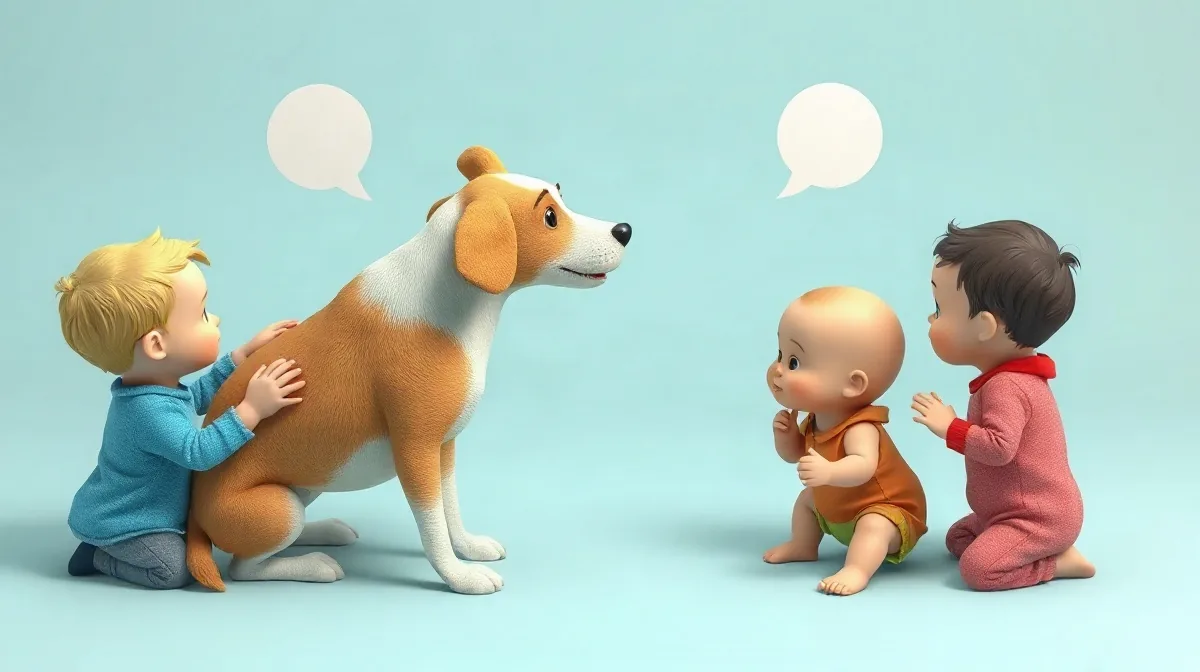
Viral Video Shows Dog Vocalizing in Response to Toddlers
A video recorded by a mother in Chicago features her Bull Terrier responding vocally to toddlers teasing her, capturing widespread attention online in September 2026. The dog’s clearly audible barks and whines appear to be a communicative response rather than random noise, sparking renewed discussion on canine vocal communication.
This footage is notable as it highlights the dog’s ability to engage vocally with children, an interaction rarely documented so distinctly. The mother, a dog trainer by profession, shared the video on social media platforms where it quickly amassed millions of views within days.
Understanding Canine Vocal Responses
Experts in animal behavior note that dogs use vocalizations such as barks, howls, whines, and growls to signal emotions and intentions. According to the American Veterinary Society of Animal Behavior, vocal communication in dogs can be context-dependent and sometimes resembles conversational exchanges.
In this case, the dog’s vocalizations in response to toddlers’ teasing may represent a form of social feedback, a behavior that trainers are increasingly able to recognize and shape. This aligns with findings from recent canine communication workshops held by the International Association of Animal Behavior Consultants in early 2026.
Implications for Canine Training Techniques
The viral video has sparked interest among professional dog trainers about incorporating vocal responsiveness into training curricula. Trainers at the Canine Training Academy in New York have begun pilot programs teaching dogs to respond vocally to specific human cues, aiming to improve interaction quality between dogs and children.
Such approaches could improve safety and understanding in homes with young children by recognizing when dogs are communicating discomfort or playfulness. The academy’s 2026 training modules include sessions on interpreting vocal signals, with course fees ranging from $300 to $600 depending on duration.
Stakeholder Perspectives on Child-Dog Interactions
Parents and caregivers are increasingly interested in how dogs communicate to avoid misunderstandings that could lead to accidents. The American Academy of Pediatrics recommends supervised interactions and education on canine body language to reduce bite incidents, which accounted for thousands of emergency visits annually in the U.S.
Videos like this one serve as educational tools demonstrating that dogs can actively respond to children’s behavior. This may encourage more informed supervision and promote empathy towards animals from an early age.
Future Directions in Research and Public Awareness
Researchers at the University of California, Davis, are currently conducting studies on interactive vocalizations between dogs and humans, aiming to document patterns and triggers in controlled settings. Results expected in late 2026 could provide quantitative data on the frequency and context of such vocal exchanges.
Public awareness campaigns by animal welfare organizations plan to use viral content to promote responsible pet ownership and improve human-canine communication. These efforts may include workshops, online resources, and collaborations with pediatricians to foster safer family environments.
Takeaway: The viral video of a dog vocally responding to toddlers’ teasing underscores the growing recognition of dogs’ communicative abilities and their importance in training and child safety.