
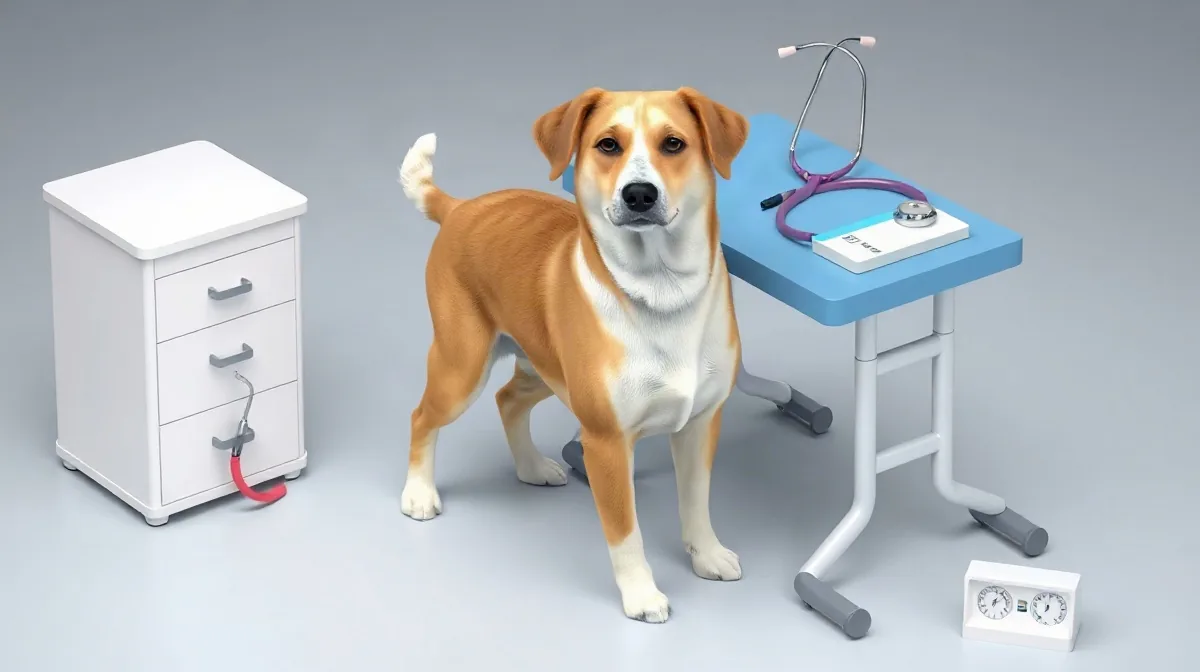
An annual vet exam gives your dog a routine health check and lets you discuss preventive care. The vet typically reviews your dog’s health and examines them from nose to tail.
The visit is also a chance to raise changes you’ve noticed, ask about diet, behaviour or activity, and discuss care suited to your dog’s age and needs. Knowing what happens at an annual vet exam can help you prepare questions and make the most of the appointment.
| Exam area | What the vet checks | Why it matters |
|---|---|---|
| Eyes | Cloudiness, discharge, redness | Changes can point to cataracts or high blood pressure |
| Ears | Wax, odor, inflammation, mites | Helps identify visible ear concerns |
| Mouth | Teeth and gums | Dental disease can be easy to miss at home |
| Heart and lungs | Heart and lung sounds | Checks these systems during the physical exam |
| Joints and limbs | Pain, flexion and extension, movement | Assesses joint comfort and movement |
| Abdomen | Organ size and discomfort | Checks for physical changes or tenderness |
- 39.6% Mixed-breed dogs in a dataset of dogs
- 10.9% Portuguese Podengo dogs in the same dataset
- 6.1% Labrador Retrievers in the same dataset
- 51.6% Male dogs in a dataset of 2,581,870 dogs
- 54.4% Neutered dogs in a dataset of 2,581,870 dogs
What does a vet check during a dog’s annual exam?
A vet’s annual exam includes a check of the dog’s eyes, ears, nose, mouth, heart, lungs, abdomen and rear end. These checks look for visible changes, unusual sounds, signs of discomfort and other clues that may need follow-up.
The eye exam looks for cloudiness, discharge and redness; changes can point to problems such as cataracts or high blood pressure. The vet checks the ears for wax buildup, odor, inflammation and mites, then examines the nose and airways for discharge or noisy breathing. In the mouth, the vet looks for dental disease and gum problems, which can be easy to miss at home.
The vet listens to the heart and lungs, feels the abdomen for changes in organ size or signs of discomfort, and checks the rear end. The exam also includes the joints: the vet may flex and extend the limbs and observe how the dog moves to assess for pain or restricted movement.
How does the vet assess a dog’s movement and body condition?
A vet assesses a dog’s movement and body condition by weighing the dog, reviewing its health history and examining how its joints and limbs move. The weight provides a current measurement to consider in context, rather than a diagnosis on its own.
During the hands-on examination, the vet checks the joints for pain and may gently flex and extend the limbs while watching the dog move. How the dog responds and moves can reveal concerns that may need follow-up; the examination helps identify them but does not, by itself, establish a diagnosis.
The physical exam also includes feeling the abdomen and other areas for changes, such as discomfort or differences in organ size. Together, the weight, joint assessment and hands-on findings give the vet several points to consider alongside the dog’s health history.
What should you tell the vet before the examination?
Before a dog’s annual examination, tell the vet about the dog’s diet, exercise, drinking, breathing, behavior, habits, lifestyle and general health. Describe what the dog eats and how its daily activity compares with its usual routine; mention changes in thirst or breathing, even if they seem mild.
Changes in urination or bowel movements are important to report, including differences in frequency, appearance or the dog’s usual pattern. Also point out anything new you have noticed in the eyes, ears, appetite or movement: for example, eye discharge, ear odor, eating less, stiffness or reluctance to move. These observations help the vet decide what to examine closely, including the eyes, ears, airways, joints and abdomen.
Bring the details of your dog’s current vaccines and parasite prevention, such as the product names and dates given or due, so the vet can review them during the visit. If you have a written record or product packaging, take it along; the vet can check the dog’s prevention history and discuss whether any updates are needed.
How do exam findings guide prevention and testing?
The findings from a dog’s annual exam help the vet tailor vaccine and parasite-prevention decisions, decide whether screening or follow-up tests are appropriate, and create a baseline for future visits. The recommendations depend on the dog’s health and lifestyle, so the same plan may not suit every dog.
Vaccines and parasite prevention are reviewed alongside the exam rather than treated as a one-size-fits-all checklist. A finding such as dental disease, joint pain, or a change in breathing can prompt a closer discussion of the dog’s overall health; screening tests may also be recommended during the wellness visit.
When an examination finding needs follow-up
The mouth, joints, heart, lungs, and abdomen each give the vet information that can guide next steps. Pain when a limb is flexed or extended, unusual heart or lung sounds, or abdominal discomfort may make further evaluation appropriate; the finding itself does not establish a diagnosis.
A recorded weight and examination notes give future visits practical comparison points. Changes in weight or in previously noted findings can help the vet decide whether the prevention plan remains suitable or whether additional assessment is warranted.
When is a routine exam not enough?
A routine annual exam is not enough when your dog has a new or worsening symptom: contact your vet rather than waiting for the next wellness visit. A wellness check gives the vet a broad look at your dog’s health, but it cannot answer every diagnostic question or replace an assessment of a specific concern.
Noisy breathing, eye discharge or redness, and an unusual odor from the ears are concrete changes to report promptly. Signs of pain—such as discomfort when moving or being handled—also deserve a call to the vet; do not wait for the annual appointment to mention them. These symptoms may need attention beyond the routine checks of the airways, eyes, ears and joints.
Ask about the next step
A physical examination can help the vet decide whether screening tests are appropriate, but the exam alone does not establish the cause of every symptom. The vet may recommend tests based on what they find and your dog’s health history. Dental problems can also be easy to miss at home, so ask the vet to examine your dog’s teeth and gums rather than assuming the mouth is healthy because nothing looks wrong.
Common questions
What does a dog’s annual wellness exam include?
Can a vet spot dental disease during a routine exam?
Should I bring anything to my dog’s wellness exam?
Will my dog need screening tests at the appointment?
Key takeaways
- The exam covers eyes, ears, airways, teeth and gums, heart, lungs, joints, abdomen and rear end.
- A weight check and limb movement assessment add useful physical-exam details.
- Bring information about diet, exercise, drinking, breathing, behavior and elimination habits.
- Vaccine and parasite-prevention plans are reviewed, and screening tests may be recommended.
References
- modernanimal.com — “Modern Animal | What to Expect at Your Pet's Annual Wellness Exam”
- VCA Animal Hospitals — “Wellness Examination in Dogs”
- Acton Veterinary Group — “Dog Wellness Exams”
- PetMD — “Pet Wellness Exams”
- avma.org — “Importance of wellness exams”