
Home grooming is usually the better choice for routine brushing and simple upkeep, while a professional salon is preferable when your dog needs a full haircut, specialist handling or grooming you cannot safely manage. The right option depends on your dog’s coat, comfort and care needs.
Grooming is more than keeping a dog looking tidy: regular care can help you notice knots, overgrown nails or changes in the skin. This guide to dogs’ home grooming or a professional salon looks at what each option involves and how to choose a comfortable, practical routine for your dog.
| Coat or task | Home care | Professional help |
|---|---|---|
| Short coat | Rubber curry brush or grooming mitt | Useful for a requested trim or assessment |
| Curly coat | Brush and comb in small sections | Consider for tight mats or a coat-specific trim |
| Double coat | Routine brushing | Ask for coat-preserving care; avoid routine shaving |
| Wire coat | Brush between appointments | Use a groomer familiar with hand-stripping |
| Tight mat | Do not cut with household scissors | Ask a groomer or veterinarian to assess |
- 4 coat types Short, double, curly and wire coats considered in this guide
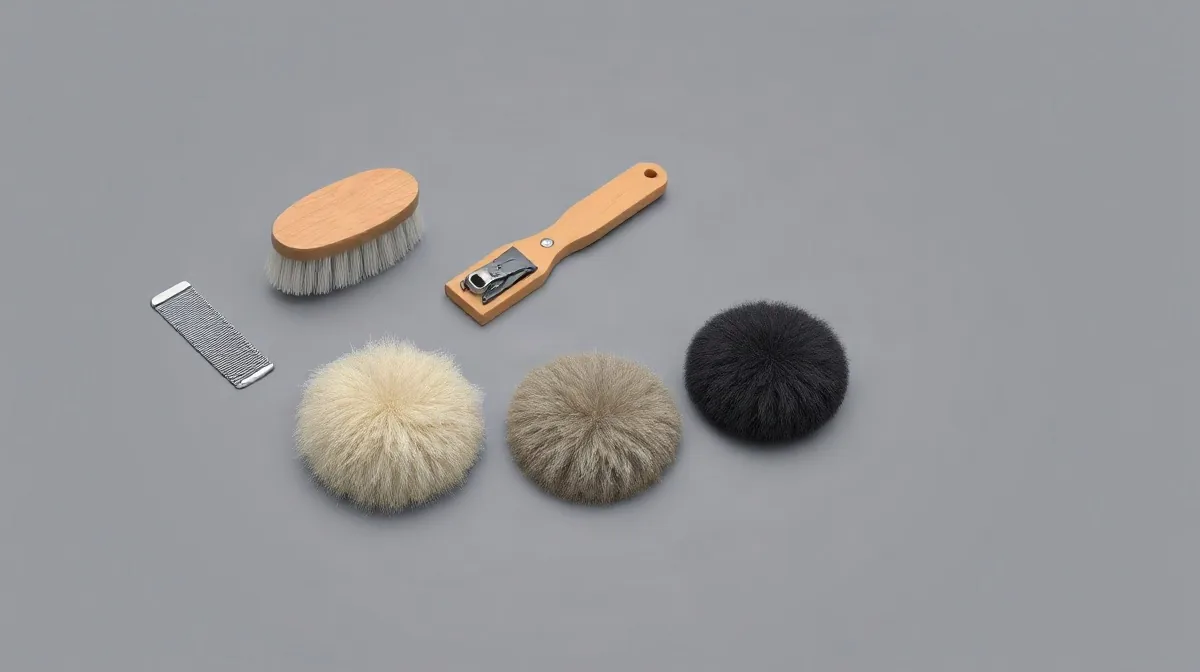
- 3 routine tools Slicker brush, metal comb and rubber curry brush listed for home care
- 2 care settings Home grooming and professional salon grooming compared
Which grooming jobs can dogs safely have at home?
Brushing, bathing and ear care
Dogs can safely have routine coat brushing, a bath with dog-formulated shampoo, and gentle cleaning of the outer ear at home. The right brush depends on coat type: a rubber curry brush or grooming mitt suits a short coat, while a slicker brush and metal comb can help with a long or curly coat.
- Short coat: Use a rubber curry brush or grooming mitt to lift loose hair, then wipe the coat with a damp cloth.
- Long or curly coat: Brush and comb in small sections. Check that the metal comb reaches the skin without pulling; stop and ease tangles apart if it catches.
- Bath: Choose shampoo formulated for dogs, not human shampoo, and rinse until no product remains in the coat.
- Outer ear: Clean only the visible outer ear with a product intended for dogs. Do not put cotton swabs into the ear canal.
These jobs are limited to routine coat and outer-ear care: the coat check is whether the comb passes through to the skin without pulling, and ear cleaning does not extend into the canal. If brushing or cleaning causes pain or irritation, stop rather than forcing the tool or product.
Which coats need a professional groomer?
Poodles and other curly-coated dogs, double-coated breeds, and wire-coated dogs maintained by hand-stripping are the coats most likely to benefit from a groomer’s specific skills. Seek professional assessment, too, if mats are compacted, tangles seem painful, or damaged areas expose the skin.
Curly, double and wire coats
Curly coats, including a Poodle’s, can form tight mats close to the skin, where brushing may hurt or fail to loosen them; a groomer can judge whether careful brushing or clipping is appropriate. Double coats combine a dense undercoat with guard hairs, so ask the groomer to preserve the coat rather than shave it as a routine response to shedding. Wire coats kept by hand-stripping need a groomer familiar with that technique: clipping can alter the coat’s texture.
- Curly coat: ask for an assessment of close-to-skin mats before brushing or clipping.
- Double coat: discuss coat preservation before any shave; shedding alone is not a reason to request one.
- Hand-stripped wire coat: confirm that the groomer can hand-strip rather than clip.
- Compacted or painful mats: seek professional assessment instead of cutting close to the body at home, especially where skin is visible through damaged areas.
What tools do owners and salons use?
Owners use coat-care tools such as a slicker brush, a metal comb and a rubber curry brush, along with dog shampoo suited to the coat; nail care calls for dog nail clippers or a pet rotary grinder. Choose tools for the task rather than reaching for household scissors, which can be hazardous around tangled fur.
Home kit and salon equipment
- At home: A slicker brush, metal comb and rubber curry brush serve different coat-care needs. Use dog shampoo formulated for the dog’s coat, and select nail clippers or a rotary grinder designed for pets.
- In a professional salon: Groomers may work with a grooming table, clippers with interchangeable blades, a high-velocity dryer and brushes chosen for the coat type.
Never cut a mat with household scissors: a dog’s skin can fold into the tangle, so it may be hard to tell where fur ends and skin begins. During nail care, stop if the dog struggles or a nail starts to bleed; do not continue trying to finish the trim.
When is home grooming the wrong choice?
Common risks and limits
Home grooming is the wrong choice when brushing hurts, the coat is felted against the skin, or your dog cannot stay still for careful work. Stop rather than pulling at a painful area or trying to finish a trim: movement can make close grooming unsafe for both dog and handler.
A tight mat should not be cut out with scissors or tackled by forcing a comb through it; ask a groomer or veterinarian to assess the safest option. During a bath, check for redness, sores, parasites or a strong smell from the ears. These signs need veterinary attention—bathing and clipping do not diagnose or treat their cause.
- Stop home brushing: pain or a coat felted against the skin means brushing should not continue.
- Seek an assessment: a tight mat calls for advice from a groomer or veterinarian, not scissors or a forced comb.
- Contact a veterinarian: redness, sores, parasites or a strong ear smell found during bathing are health concerns, not grooming tasks.
- Plan salon care around distress: tell the salon about handling sensitivities before booking and ask how it manages them.
A professional appointment is not automatically safer for a distressed dog. Share your dog’s handling sensitivities before making the booking, then ask the salon how it responds to them; if its approach does not seem suitable, discuss alternatives with a veterinarian.
How should you choose between home care and a salon?
Choose home brushing when your dog’s coat has no painful mats and your dog calmly accepts a brush and comb; book a professional groomer for a coat-specific trim, hand-stripping, difficult matting or a full clip that needs careful work near the skin.
- Home brushing: Check the coat for painful mats before brushing, and stop if your dog cannot tolerate the brush or comb. Regular brushing can keep tangles from building up between salon visits.
- Salon grooming: Ask for a groomer when the job involves hand-stripping, a trim suited to the coat, difficult mats or clipping close to the skin. Before booking, ask which tools and techniques the salon plans to use.
A double coat or a wire coat normally maintained by hand-stripping deserves particular care when choosing a salon method. Discuss the coat type and the planned approach in advance rather than assuming every coat should be clipped.
Keep up care between appointments
A salon visit does not prevent tangles from returning as the coat grows, so continue routine brushing between appointments. Recheck the coat regularly and seek professional help if mats become difficult or painful to handle at home.
Common questions
Can I groom my dog at home?
Can I shave a double-coated dog?
Should I cut out a mat with scissors?
When should grooming concerns go to a veterinarian?
Key takeaways
- Use a rubber curry brush or grooming mitt for routine care of a short coat.
- Curly coats, hand-stripped wire coats and difficult mats may need a professional groomer.
- Do not cut a tight mat with household scissors.
- Redness, sores, parasites or a strong ear smell call for veterinary advice.
