
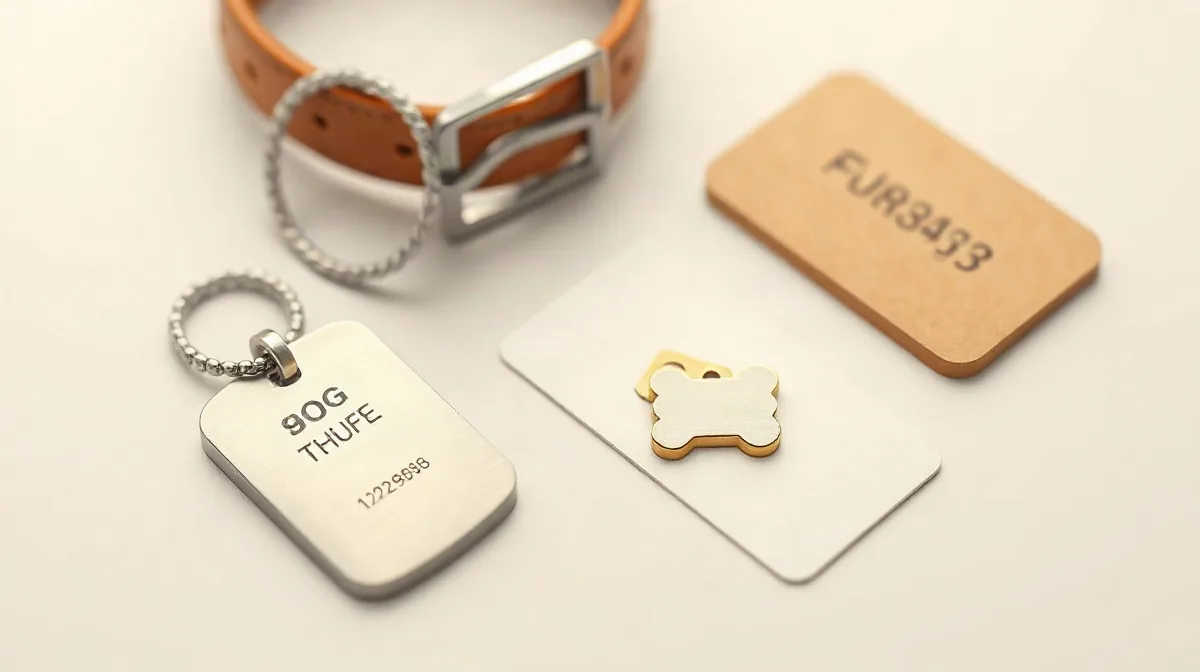
A dog tag should include the dog’s name, your current phone number, and a way to identify you quickly if the dog gets lost. If there is room, add a second contact detail or a clear note that helps someone reach you fast.
That simple metal tag can be the difference between a quick reunion and a long, stressful search. It works best when the information is easy to read, kept up to date, and limited to the details a finder needs right away. In this guide to Dog Tags: What Every Tag Should Include, we’ll look at the essentials that make a tag useful rather than cluttered.
For a wider look at everyday care and safety, see our broader overview, «Dogs: A Complete Health & Care Guide for Every Owner». This article focuses on the practical side of dog tags: what belongs on them, what can be left off, and how to make sure they do their most important job well.
| Item | Best use | Common risk |
|---|---|---|
| Dog’s name | Helps a finder call the dog calmly | Not enough on its own |
| Phone number | Fastest way to reach the owner | Fails if the number is old |
| Microchip note | Signals backup identification | Requires a scan |
| Short medical alert | Warns about urgent handling needs | Too much text becomes unreadable |
- 1 primary phone number to make the tag readable fast
- 2 contact numbers many owners use when space allows
- 1 microchip note that can point a finder to backup ID
- 3 update triggers: new number, new collar, or move
What should a dog tag include first?
Name and phone number
A dog tag should start with the dog’s name and a working phone number, because a finder can call the dog calmly by name and reach you fast. Keep the first line short and easy to read at a glance, and make the phone number the main contact detail.
- Name first: the dog’s own name is the quickest way to turn a stressful moment into a calmer one.
- One or two numbers: many tags use a single phone number; some owners add a second number as backup.
- Short text: avoid crowding the tag, because a packed layout is harder to use in an emergency.
Location clue
If there is room after the name and phone number, add a city or neighborhood. That extra clue helps a finder judge whether the dog is likely local or has wandered far from home.
Use only the details that matter most on a small tag: name, contact number, and, if space allows, a location hint. A clean, readable tag works better than a dense one when every second counts.
Why add a second contact or microchip note?
Backup contact
A second phone number matters because the first line can be unreachable, busy, or out of service, so a finder has another way to reach you fast. A dog tag with two contacts reduces the chance that one missed call becomes a dead end, especially if the collar is the only visible ID.
- Primary number: the main line on the tag for the quickest call.
- Second number: a backup if the first line is busy, unreachable, or disconnected.
Microchip reminder
A short note such as “microchipped” tells a finder or veterinarian to scan the dog if the tag is lost or the number does not connect. That matters because a collar can slip off, but a microchip stays inside the dog and works as backup ID when the visible tag is gone.
- Tag: the fastest visible ID for a quick call home.
- Microchip: the hidden backup ID if the tag is missing.
What medical details belong on a tag?
When a medical alert helps
A tag should carry only a medical alert that changes immediate handling, such as diabetic, epileptic, or needs meds. A very short warning like no food or allergic can also be useful if the dog may be found after a long delay, because it tells a finder what not to offer right away.
What to leave off
Leave off a full medical history, because a tag rarely has room for more than one brief alert. If a dog takes daily medicine, keep the exact drug list on a separate card in a wallet or a phone note instead of trying to squeeze every detail onto the tag.
- Include: one urgent condition, such as diabetic or epileptic.
- Include: one short handling note, such as no food or allergic, when a delay matters.
- Leave off: the full list of daily drugs and any long medical history.
- Store elsewhere: exact medication names in a wallet card or phone note.
When do tag details become a problem?
Privacy and safety
Tag details become a problem when they point strangers to the wrong contact, expose too much personal information, or make a dog harder to return safely. An old phone number is the clearest failure point: if the tag still works but reaches the wrong person, it can delay a reunion more than a blank tag would. A home address also raises privacy concerns for dogs that travel, stay with walkers, or live in shared housing.
- Phone number: keep it current; one outdated number is enough to misdirect a finder.
- Address: leave it off if the dog regularly uses sitters, walkers, or multiple homes.
Readability and comfort
Too many lines can make a tag hard to read on a moving dog, especially on small breeds and puppies where the surface area is limited. The more text squeezed onto the plate, the smaller each line becomes, and the faster it blurs when the collar swings. A noisy or heavy tag can also irritate a dog; if scratching starts, a lighter aluminum or silicone option may be a better fit.
- Text load: keep the message short enough to read at a glance while the dog is in motion.
- Material: choose lighter aluminum or silicone if metal weight or clinking seems to bother the dog.
Which tag style works best for everyday use?
Metal versus engraved
Stamped metal tags work best for everyday use because the contact details stay readable without batteries, screens, or charging. Laser-engraved tags are the better pick when you need very fine text, such as two phone numbers or a short medical note, and they keep that information legible on a small tag.
- Stamped metal: simple, durable, and easy to read at a glance.
- Laser-engraved: better for tight layouts with 2 phone numbers or a brief medical line.
- Everyday rule: choose the style that keeps the name and contact details visible in low light and daily wear.
Attachment and visibility
A split-ring attachment is the standard choice for most dog tags, but a sturdy clasp can be easier when collars are changed often. For evening walks, a reflective collar or reflective tag can improve visibility after dark, which makes the tag part of the dog’s safety gear rather than just identification.
For practical use, the best setup is usually a readable metal tag, a secure attachment that suits your collar routine, and one reflective element for dusk or nighttime outings. That combination keeps the tag easy to see, easy to swap, and useful when your dog is out after dark.
How often should you check and update a dog tag?
Update triggers
Check a dog tag whenever a phone number changes, a family member moves, or the dog gets a new collar; for dogs that travel, board, or go to daycare, confirm the contact details before each trip. A tag is only useful if the number on it still reaches the right person, so any change in household contact information should trigger an immediate update.
Use a quick pre-trip check as a habit: before boarding, daycare, or travel, make sure the engraved name, phone number, and any backup contact still match your current details. If a dog wears different collars for home and outings, the tag should move with the collar and still be easy to read on the new one.
Wear and replacement
Inspect the engraving every few months for wear, rust, or fading, because shallow lettering can become hard to read long before the tag breaks. Replace bent rings and cracked plastic tags promptly so the tag does not fall off during walks, grooming, or play.
- Every few months: check for fading, rust, and worn engraving.
- Immediately: replace bent rings, split loops, or cracked plastic tags.
- Before each trip: verify the current phone number and emergency contact.
Frequently asked questions
What is the single most important thing on a dog tag?
Should I put my home address on the tag?
Is a microchip enough without a tag?
What if my dog has a medical condition?
Key takeaways
- Put the dog’s name and a current phone number on every tag.
- Use a second contact or a microchip note as backup identification.
- Keep medical alerts short and only for urgent handling needs.
- Check tag wear, ring strength, and contact details regularly.
