
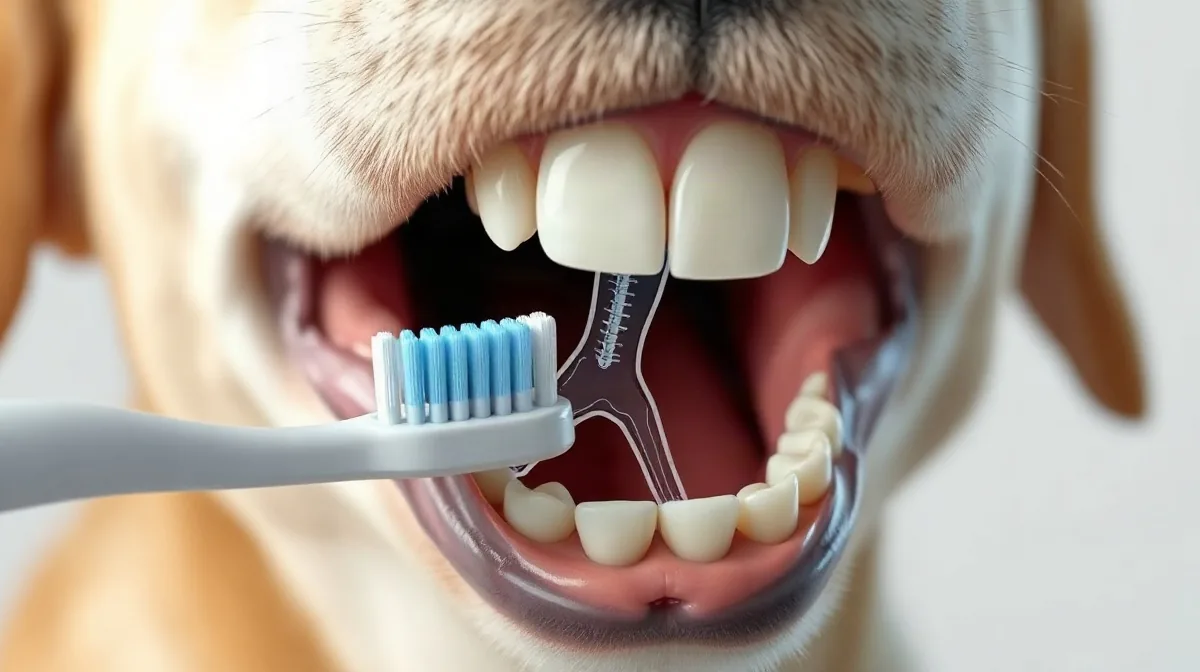
Dog dental disease causes bad breath, gum inflammation and pain, but regular tooth-brushing and veterinary check-ups can help prevent it. Treatment depends on the problem and may include professional cleaning or other dental care.
Dogs may hide mouth pain, so changes such as trouble chewing, drooling or bleeding gums deserve attention. Dental disease can worsen without obvious signs; a veterinarian can examine your dog’s mouth and recommend the right next step.
| Care step | Main role | Important limit |
|---|---|---|
| Daily tooth brushing | Removes plaque at home | Does not replace veterinary exams |
| Dental chews | May help reduce buildup | Supervise; include in daily food allowance |
| Dental toys | Support chewing and oral care | Do not replace brushing |
| Professional cleaning and exam | Allows veterinary assessment and cleaning below the gumline | May require anesthesia and pre-anesthetic blood work |
| Dental X-rays | Show disease hidden below the gumline | Cannot be replaced by an awake visual check |
- 40% of dogs’ and cats’ dental disease is under the gumline and can only be seen on dental X-rays, according to PetMD
- about $500 to $5,000 PetMD’s stated price range for dental cleanings for dogs
- no more than 10% maximum share of daily food intake for chews and treats
How does plaque turn into periodontal disease?
Plaque becomes a periodontal problem when bacterial film is left on the teeth long enough to harden into tartar, especially near the gumline, where it can inflame the gums.
Daily brushing helps remove plaque before it hardens. Dental chews may help reduce tartar, but they do not replace brushing.
Why the visible tooth can mislead
Periodontal disease affects more than the visible crown: it can extend below the gumline into the tissues that support the teeth. Established disease may damage the supporting bone, so a tooth that looks clean above the gums can still have deeper problems. A veterinary oral examination is needed to assess areas you cannot see at home.
What signs of dental disease can you spot at home?
At home, signs of dental disease include red or swollen gums, tartar on the teeth, bleeding near the gumline, bad breath, drooling, and changes in how your dog eats.
Watch for pawing at the mouth or reluctance to chew. A dog may drop food, chew on one side, or avoid hard food to reduce discomfort; these changes can be easier to notice than a quick look inside the mouth.
When your dog is calm, gently lift the lips to inspect the teeth and gums. Do not force the mouth open if your dog resists or seems painful; stop and contact your veterinarian about an examination.
Why does a veterinary dental exam include X-rays?
Veterinary dental X-rays reveal disease beneath the gums that an awake visual check cannot show, including problems affecting tooth roots and supporting bone.
PetMD says 40% of dogs’ and cats’ dental disease is under the gumline and can only be seen on dental X-rays. Imaging lets the veterinary team assess hidden disease and decide whether a tooth needs further treatment.
Ask whether your dog’s dental examination includes X-rays, especially if you notice gum changes, pain or loose teeth. A look at the visible tooth surfaces alone cannot assess every root or the bone supporting it.
How should you brush a dog’s teeth at home?
Brush your dog’s teeth daily with a dog toothbrush and toothpaste made for dogs; daily brushing is the most effective home-care method for removing plaque.
Introduce the toothbrush gradually. Begin with brief contact around your dog’s lips and gums, then move towards brushing the outer surfaces of the teeth as your dog becomes comfortable.
Use toothpaste formulated for dogs. Human toothpaste is not intended to be swallowed, so it is not the right choice for brushing your dog’s teeth.
If your dog will not tolerate brushing, ask your veterinarian about other dental-care options. Dental chews and toys may help, but they do not replace brushing when brushing is possible.
Do dental chews and toys replace brushing?
Dental chews and toys can help reduce tartar buildup, but they do not replace daily tooth brushing, the most effective home care for preventing dental disease.
Choose chews and toys made for dental use, and supervise your dog whenever they chew. Include edible chews in your dog’s daily food allowance to help prevent weight gain; chews and treats should make up no more than 10% of daily food intake.
What happens during professional cleaning?
A professional dog dental cleaning may use general anesthesia so the veterinary team can examine each tooth and clean plaque and tartar from above and below the gumline.
Before anesthesia, the clinic may recommend blood work to assess whether your dog is fit for the procedure. The cleaning removes deposits, while the dental examination and X-rays help identify problems that need treatment beyond cleaning, such as teeth that may require extraction.
What to clarify before the procedure
Ask the clinic for an itemised estimate so you know which parts of care are included. Check whether it covers:
- General anesthesia
- Dental X-rays
- Tooth extractions, if needed
- Follow-up care
What can professional cleaning cost?
Professional dental cleanings for dogs can cost about $500 to $5,000, PetMD gives as the price range.
The final bill depends on what the veterinary exam finds and whether the procedure includes dental X-rays or treatment such as extractions. Ask your clinic for an itemized estimate before booking, so you can see which services are included.
Also ask how the clinic will handle additional treatment if it finds a problem during the procedure. Clarify whether the clinic will contact you before proceeding and how any extra work will affect the estimate.
When does home care fall short?
Home care falls short when your dog has established disease below the gumline or needs a veterinary examination: brushing helps slow plaque buildup but cannot treat disease already there.
Dental chews and toys can support brushing, but they are not substitutes for it or for professional care. Supervise your dog with any chew or toy; chewing unsupervised can pose a risk.
Do not wait for your dog to struggle with food. Dogs may keep eating despite oral pain, so arrange a veterinary appointment for bleeding gums, loose teeth, facial swelling, persistent bad breath or signs of pain.
Sources
- Our Vets in San Diego — “How To Stop & Prevent Periodontal Disease in Dogs”
- pdsa.org.uk — “Dental disease in dogs – PDSA”
- vet.cornell.edu — “Dental disease and home dental care | Cornell University College of Veterinary Medicine”
- CSU Veterinary Health System — “Preventing dental disease in dogs and cats”
- pmc.ncbi.nlm.nih.gov — “Revisiting Periodontal Disease in Dogs: How to Manage This New Old Problem?”